


How Colour Choice Impacts Your Modest Fashion Look
Colour plays a key role in modest fashion, influencing how your outfit is perceived and how you feel wearing it. From classic black to soft pastels and rich jewel tones, the popular colours in modest fashion you choose can express personality, complement your skin tone, and align with Islamic values. Here’s what you need to know: Whether you are learning how to style everyday abayas or selecting a formal thobe, the right palette is essential.
- Colours and Emotions: Neutrals like beige and grey bring calmness, pastels exude charm, and bold tones like black or emerald convey confidence.
- Skin Tone Matching: Warm undertones suit earthy hues like mustard or coral, cool undertones shine in icy blues or lavender, while neutral tones are versatile.
- Seasonal Choices: Light shades like mint or blush work for spring/summer, while darker tones like burgundy or olive are great for autumn/winter.
- Cultural Significance: Green symbolises paradise, white reflects purity, and black ties to strength and devotion in Islamic traditions.
How Colour Psychology Affects Modest Fashion
Colours do more than just enhance your look - they shape perceptions and evoke emotions. In modest fashion, where garments often cover more of the body, colour becomes a key form of self-expression. A black abaya can convey quiet strength, while a lavender hijab might exude warmth and approachability.
How Different Colours Affect Emotions
Neutral tones like beige, taupe, and soft grey create a sense of calm and stability. These shades align with the principles of modesty by reflecting simplicity and humility, while also projecting quiet confidence. In professional settings, they communicate poise and elegance without drawing too much attention.
Pastel shades - think blush pink, baby blue, mint, and lavender - are associated with kindness, charm, and femininity. These softer colours are particularly favoured by younger Muslim women seeking to add a modern twist to traditional outfits. They balance approachability with a creative flair, offering a fresh take on modest fashion.
Bold colours make a statement. Black, for example, is often seen as a symbol of strength and dignity. As Garaza puts it:
A black abaya doesn't scream. It holds space. It says: 'I'm present, but not on display'
.
Jewel tones like emerald, sapphire, and burgundy bring a sense of confidence and sophistication, especially for formal events. Meanwhile, subtle red accents can hint at vitality and inner strength.
Beyond just emotional impact, colours in Islamic fashion hold deep cultural and spiritual significance.
Colour Symbolism in Islamic Fashion
Colours in Islamic tradition often carry profound meanings that go beyond aesthetics. Green, for instance, is considered the most sacred colour, symbolising paradise (Jannah), renewal, and spiritual harmony. It is also known as the favourite colour of the Prophet Muhammad (peace be upon him), making it a popular choice for scarves and accessories as a sign of remembrance.
White is another colour with deep significance. Known as a "Sunnah Colour", it represents purity, peace, and equality. It is traditionally worn during Hajj and Ramadan to symbolise spiritual cleanliness and new beginnings. As Garaza notes:
In white, a woman seems to say, 'Today I begin again, with God and with myself'
.
Black, while often admired for its sophistication, also holds spiritual meaning in Sufi traditions. It symbolises hidden knowledge and devotion and is closely linked to the Holy Kaaba in Mecca. Blue, on the other hand, is associated with knowledge, tranquillity, and inner peace, making it a thoughtful choice for moments of spiritual contemplation.
sbb-itb-81d10cb
Selecting Colours That Match Your Skin Tone
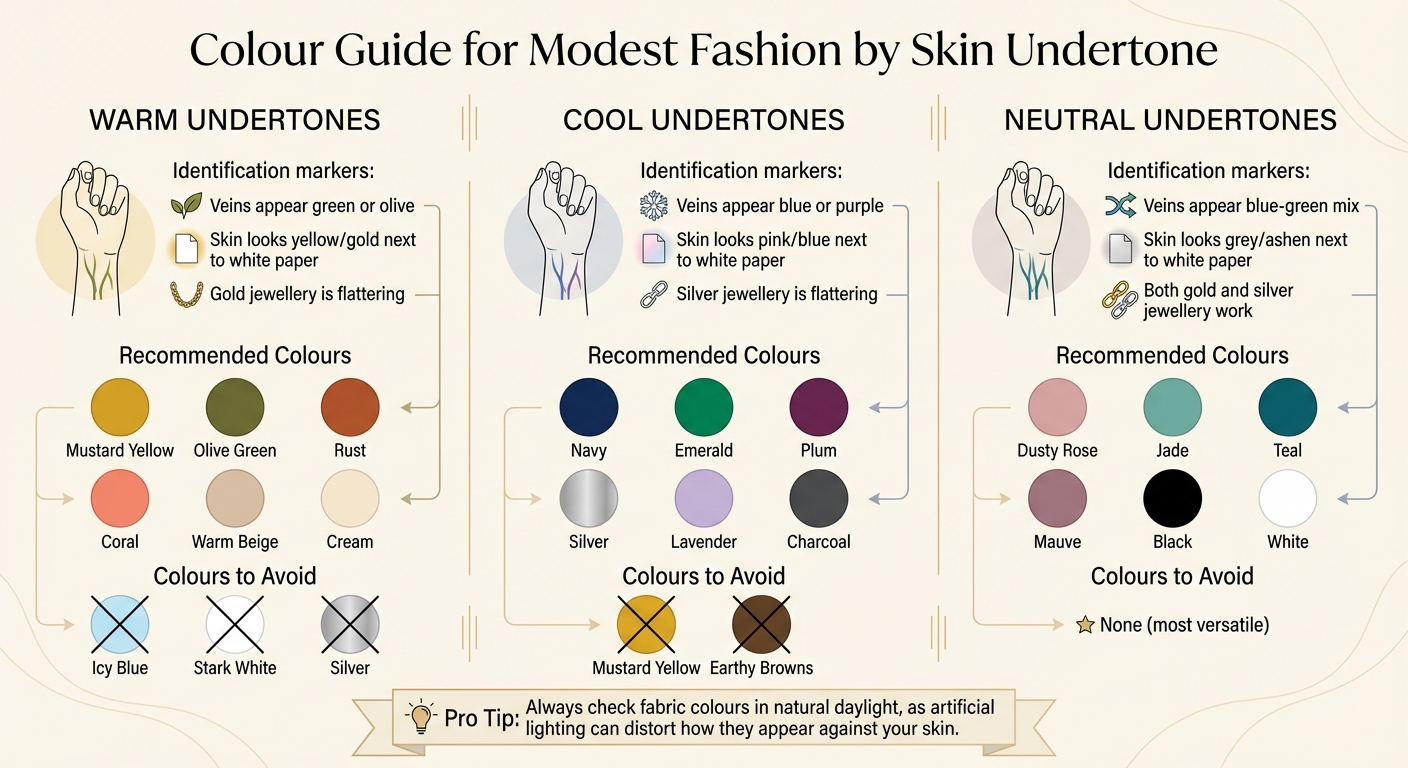
Modest Fashion Colour Guide by Skin Undertone
The first step in choosing colours that enhance your essential modest pieces is understanding your skin's undertone. While your overall skin tone - whether light, medium, or dark - can vary due to sun exposure, your undertone remains constant throughout your life. This subtle characteristic plays a key role in determining which colours will make your complexion glow and which might leave you looking less vibrant. Once you identify your undertone, you can confidently select shades that bring out your natural beauty.
How to Identify Your Skin Undertone
Skin undertones fall into three main categories: warm (golden, yellow, or peachy), cool (pink, red, or bluish), and neutral (a mix of both). There are a few simple ways to figure out where you fall:
- Vein Test: Look at the veins on your wrist. Blue or purple veins suggest a cool undertone, green or olive veins point to a warm undertone, and a mix of both indicates a neutral undertone.
- White Paper Test: Hold a white sheet of paper next to your clean, makeup-free face in natural light. If your skin appears yellow or gold, you have a warm undertone. If it looks pink or blue, you lean cool. A grey or ashen tone suggests a neutral undertone.
- Jewellery Test: Gold jewellery tends to flatter warm undertones, while silver or platinum suits cool undertones.
As Honey Hijabs puts it:
Identifying undertones has become an essential step in the fashion and beauty space as it can truly make or break a look
.
Once you’ve determined your undertone, you can explore which colours best complement your features.
Colour Pairings for Different Skin Tones
Knowing your undertone makes selecting flattering colours much easier. Here’s a guide to help you choose:
- Warm Undertones: Earthy and golden hues like mustard yellow, olive green, rust, coral, warm beige, and cream work beautifully. For instance, pairing an Al-Badr Clothing abaya in camel or terracotta (£27.99–£34.99) with a gold-toned hijab creates a cohesive and glowing look.
- Cool Undertones: Icy and deep shades such as sapphire blue, emerald green, plum, navy, charcoal grey, and lavender bring out the best in cool-toned skin. A navy thobe (£19.99–£32.99) or an emerald abaya can highlight your complexion, while avoiding mustard yellows or earthy browns keeps your look vibrant.
- Neutral Undertones: These allow for the most versatility, as both warm and cool palettes can work. Shades like dusty rose, jade, teal, and mauve are especially flattering. If an abaya colour clashes slightly with your undertone, balance it out with a contrasting hijab or bold jewellery.
Here’s a quick reference table for recommended and avoided colours by undertone:
| Undertone | Recommended Colours | Colours to Avoid |
|---|---|---|
| Warm | Mustard Yellow, Olive Green, Rust, Coral, Warm Beige, Cream | Icy Blue, Stark White, Silver |
| Cool | Navy, Emerald, Plum, Silver, Lavender, Charcoal | Mustard Yellow, Earthy Browns |
| Neutral | Dusty Rose, Jade, Teal, Mauve, Black, White | None |
When shopping, always check fabric colours in natural daylight, as artificial lighting can distort how they appear against your skin. By focusing on shades that complement your undertone, you can effortlessly create elegant and balanced modest outfits.
Choosing Colours for Each Season
Once you've got the hang of picking colours that flatter your skin tone, it’s time to think about how the seasons play into your wardrobe. Seasonal changes don’t just influence the weather - they can also guide your colour choices, helping you stay stylish and comfortable all year round.
By aligning your wardrobe with the seasons, you can manage body temperature, stay on trend, and maintain a polished look that feels just right for the time of year.
Light Colours for Spring and Summer
As the weather warms up, lighter and more reflective colours become your go-to. Shades like white, off-white, cream, and beige not only keep you cool but also create a sleek, sophisticated foundation for your outfits.
Pastels - think baby blue, mint green, blush pink, lavender, and peach - are perfect for a breezy, elegant vibe. Fashion consultant Fatima Zohra Meralet sums it up beautifully:
Summer is the perfect time to play with colors, explore breathable fabrics, and shine in your modest fashion.
For a modern summer look, earthy tones like sage, terracotta, and sand beige are on-trend. If you’re feeling bold, vibrant colours like golden yellow, aqua, and emerald green make a striking statement.
Skin tone can also guide your choices here:
- Fair skin: Lavender, peach, or mint green.
- Medium or tan complexions: Coral, mustard, or olive.
- Deep skin tones: Bold shades like fuchsia, royal blue, or turmeric yellow.
While darker staples like black and navy are always in style, they can trap heat during summer. Instead, swap them out for lighter shades like dusty rose, taupe, light grey, or soft mocha for a professional yet breathable look. And don’t forget about fabrics - light colours work best with breathable materials like chiffon, cotton voile, or linen blends to keep you comfortable.
As the weather cools, your colour palette can shift to deeper, richer tones that suit the changing season.
Dark and Bold Colours for Autumn and Winter
When autumn sets in, it’s time to embrace darker, richer colours that reflect the season’s mood. Shades like olive green, deep brown, and charcoal create a strong, natural look. Fashion expert Abu Musa Karimov notes:
Earthy colours in abayas bring a grounded, natural aesthetic that aligns beautifully with the spirit of the fall season.
For winter, jewel tones - emerald, sapphire, ruby, and deep purple - are perfect for formal occasions, adding an elegant touch that pairs well with cooler complexions. Burgundy, chocolate, and forest green are also fantastic for layering, bringing warmth and depth to modest winter outfits. These colours work especially well for winter djellabas (£49.99) and heavier thobes.
Black, of course, remains a timeless choice for winter. It’s versatile, dignified, and pairs effortlessly with bold accessories. For a contemporary twist, try colour clashes like forest green with berry or mauve tones for a rich, layered effect. And if you’re dressing up for a winter wedding or Eid celebration, accentuate deep-coloured abayas with gold jewellery or metallic belts for a touch of luxury.
These seasonal choices not only reflect modern fashion but also honour the traditional meanings behind certain colours in Islamic attire. A balanced autumn and winter wardrobe might pair dark foundational colours with lighter neutral hijabs - like beige or cream - for subtle contrast. This approach adds depth to your look while staying true to the season’s mood, letting your personality and the occasion shine through in your choices.
How to Combine Colours for a Polished Look
Once you've nailed down the colours that suit your skin tone and the season, the next step is learning how to mix and match them for a polished look. The right combinations can elevate your modest wardrobe, helping you strike the perfect balance between understated elegance and standout style. Whether you're dressing for an event or keeping it casual, pairing colours thoughtfully is key.
Pairing Neutral Colours with Bold Accents
Neutral tones are your go-to base - shades like black, white, grey, beige, and taupe complement all skin tones and serve as a versatile canvas for your outfits.
To add dimension, pair rich jewel tones like emerald, sapphire, or burgundy with softer neutrals such as mink, nude, or blush pink. This pairing creates a refined and balanced look. As Fabulive Limited beautifully puts it:
Luxury, in its most believable form, is never frantic... It arrives with composure - an ease that suggests intention long before the mirror.
For those who prefer keeping their main pieces neutral, consider adding a pop of colour through accessories. For example, a beige or black abaya can be styled with a vibrant purple hijab or gold accents to inject personality without overpowering the outfit. Small details make a big difference too - matching your hijab to the embroidery or beadwork on your abaya creates effortless coordination.
Texture can also act as an accent. A matte scarf paired with an abaya featuring a soft sheen adds depth without relying on bold colours. For a polished "quiet luxury" aesthetic, focus on undertones rather than exact matches. Cool-toned abayas in shades like charcoal or slate pair beautifully with hijabs in complementary hues such as steel or dove grey.
These combinations offer a seamless transition between casual and formal occasions.
Colour Combinations for Formal and Casual Wear
Once you've mastered neutrals and accents, you can adapt your colour choices to suit different settings - from formal events to casual outings or professional environments. While keeping current trends in mind, remember that your combinations can also reflect the timeless elegance of modest fashion.
For formal occasions, darker tones and jewel hues (e.g. navy paired with gold, emerald with nude, or black with burgundy) convey elegance and sophistication. On the other hand, casual daytime outfits shine with lighter, brighter colours and pastels. Pairings like soft pink with grey, beige with light blue, white with blush, olive green with warm beige, or soft mint with beige create a relaxed yet stylish vibe.
For the workplace, professional neutrals are always a safe bet. Combinations such as black with grey, muted brown with taupe, or navy with stone maintain a polished and refined look.
If you prefer a more understated style, try incorporating bold colours through accessories like statement jewellery, handbags, or shoes while keeping your clothing neutral. And here’s a tip: always check your outfit in natural light to ensure the colours harmonise perfectly.
Respecting Colour Traditions in Islamic Fashion
Colour choices in modest fashion carry deep cultural and spiritual meaning. Honouring these traditions allows you to celebrate your heritage while blending timeless values with contemporary style.
Popular Colour Choices by Region
Regional traditions play a significant role in shaping modest fashion, with colour preferences often influenced by local climate, culture, and customs. In the Middle East, black and beige are classic choices, valued for their elegance and understated appeal. The black abaya, often paired with a shayla, is a cornerstone of Arab attire. Meanwhile, Southeast Asia favours bright and floral hues, reflecting the vibrancy of its tropical landscapes. In the Indo-Pak region, colourful shalwar-kameez or long kurtis, often complemented by a dupatta or hijab, are popular options. African modest fashion is renowned for its bold and vibrant fabrics, frequently paired with matching headwraps, while Turkish styles lean towards lighter tones, featuring pashmina hijabs and tailored coats.
These traditional choices often align with the local climate. For instance, you might pair a neutral black abaya with gold accessories or a colourful hijab for a Middle Eastern-inspired outfit. Alternatively, floral prints on modern silhouettes, like tiered maxi dresses, can bring a Southeast Asian flair to your wardrobe.
Balancing Modern Trends with Traditional Values
Modern modest fashion strikes a careful balance between contemporary trends and traditional values. The principle of haya (modesty) remains central, influencing colour choices that reflect humility and personal identity without drawing excessive attention. This respect for heritage is seamlessly integrated with modern palettes.
As the Prophet Muhammad ﷺ stated in Sahih Muslim:
Allah is Beautiful and loves beauty.
Today, modest fashion honours this sentiment by blending traditional elements with fresh trends. A black or beige abaya can serve as a timeless base, allowing for accents like pastel hijabs in blush pink or lavender, or accessories in rich jewel tones such as emerald or burgundy. To maintain modesty, avoid neon or overly bright colours, opting instead for softer, muted, or pastel variations of trendy shades.
The global halal fashion market, valued at £407.3 billion in 2023, highlights the significance of combining cultural heritage with modern aesthetics - not just as a personal expression of faith and style, but also as a thriving economic force.
Conclusion
Selecting the right colours for your modest fashion wardrobe is about blending personal expression, respect for traditions, and practicality. As Awais Ali from Hals & Sals explains:
Colour can completely transform your modest style when you choose it wisely
.
Start with neutral tones like white, grey, black, beige, or taupe as your foundation. From there, incorporate hues that highlight your skin tone. For example, pastels and bold jewel tones often complement lighter skin tones, while earthy shades like olive, teal, and cranberry enhance medium skin tones with yellow undertones.
In modest fashion, coordination is more important than exact matching. Pairing a cool-toned hijab with a similarly cool-toned abaya creates a cohesive look. For seasonal practicality, lighter shades such as mint or baby blue are ideal for summer, while richer colours like burgundy or emerald work well in winter. This thoughtful approach not only honours traditions but also addresses the needs of everyday wear, creating a polished and functional capsule wardrobe.
Use colour accents to show personality while maintaining modesty. Bright details, like a bold accessory or a vibrant inner slip dress, can add interest without overwhelming your outfit. Whether you gravitate towards earthy tones like sage green and terracotta or prefer the timeless charm of monochromatic styles, your colour choices should reflect your individuality while respecting tradition. By following these principles, your wardrobe can effortlessly balance heritage with contemporary elegance.
FAQs
How do I work out my skin undertone quickly?
To figure out your skin undertone quickly, take a look at the veins on your wrist. If they appear blue or purple, you likely have a cool undertone. If they seem green, it suggests a warm undertone. A mix of both colours usually indicates a neutral undertone.
Another way to check is by noticing how jewellery looks on you: gold jewellery tends to flatter warm undertones, while silver jewellery pairs better with cool undertones. These easy tricks can make identifying your undertone much simpler.
What colours look modest but still feel stylish?
Neutral and earthy tones are perfect for achieving a modest yet stylish look. Colours like nudes, taupes, beiges, and soft greys complement most skin tones, bringing a sense of timeless sophistication to any outfit.
Darker shades, such as navy, charcoal, and deep browns, exude elegance and versatility, making them suitable for a variety of occasions. Pair these tones with lighter or contrasting accessories to create a polished and balanced look.
How do I mix two colours without clashing?
To blend two colours effectively, consider contrasting or complementary combinations. Contrasting colours, such as light and dark tones, bring balance to an outfit - for instance, pairing a white abaya with a dark hijab. Complementary colours, which sit opposite each other on the colour wheel, also work well together, like a dark red abaya matched with a rosy pink hijab. Another option is mixing neutral tones with bold colours for a polished and sophisticated appearance.