


Why Modest Fashion Is Growing in the UK
Modest fashion is no longer niche in the UK - it’s mainstream. Major retailers like ASOS and Marks & Spencer now cater to a growing demand for stylish, modest clothing. This shift reflects changing demographics and attitudes, with British Muslims making up 6.5% of the population and younger generations driving the trend.
Key factors include:
- Rising purchasing power: Muslim women’s median salaries exceed the UK average by 20%.
- Broader appeal: Many women prefer modest styles for comfort and body positivity, not just for religious reasons.
- Post-pandemic changes: Looser, relaxed fits gained popularity, aligning with modest preferences.
- Challenges: Many shoppers still struggle with limited options, poor sizing, and unsuitable fabrics.
Brands like Al-Badr Clothing are stepping up, offering quality fabrics, diverse sizing, and year-round collections that meet these needs. The future of modest fashion lies in better accessibility, stylish designs, and understanding the needs of this growing audience.
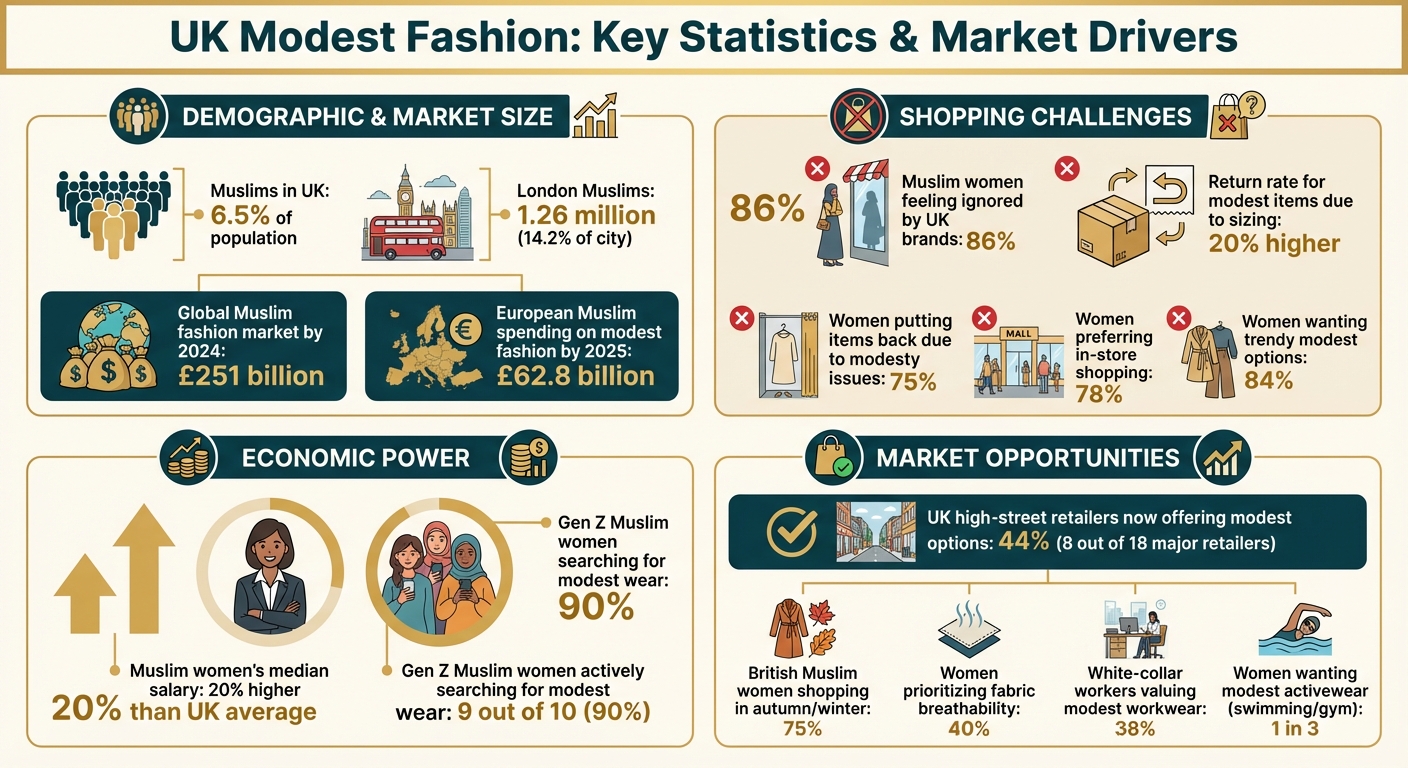
UK Modest Fashion Market Statistics and Growth Drivers 2024
What's Driving the Demand for Modest Fashion
The Impact of Religious and Ethnic Diversity
The growing diversity in the UK, particularly among its Muslim population, is reshaping the fashion industry. Muslims now make up 6.5% of the UK's population, with London alone hosting 1.26 million Muslims, accounting for 14.2% of the city's residents.
This demographic is not just growing but also wielding considerable economic influence. For instance, the median salary of working Muslim women in the UK is now 20% higher than the national average. This increased purchasing power, combined with a strong demand for modest clothing, has created a lucrative market that European retailers are keen to tap into. In fact, Muslim spending on modest fashion across Europe is expected to hit £62.8 billion by 2025.
Younger generations are leading this shift. Among British Muslim women from Gen Z, nine out of ten actively search for modest wear. And they’re not just browsing - they’re ready to invest in brands that cater to their needs. As 19-year-old Zahra from Birmingham puts it:
"It feels like we're an afterthought, and yet, my friends and I are ready to spend on brands that get us".
This economically empowered and diverse audience is driving a transformation in consumer habits.
Changing Preferences After the Pandemic
The pandemic brought about a significant shift in how people think about clothing. Lockdowns pushed brands to embrace looser, more comfortable styles, such as oversized fits and relaxed silhouettes, which have since become mainstream. Nazmin Alim, the founder of Aab, highlighted this evolution:
"As a business we've pivoted from dresses, embroidery and embellishment, into modest activewear and pyjamas".
What was once considered niche or religious attire became appealing to a broader audience prioritising comfort over restrictive clothing.
The pandemic also accelerated the growth of e-commerce, giving modest fashion brands a platform to connect with customers through Instagram and TikTok while physical stores remained closed. However, even with this digital boom, 78% of British Muslim women still prefer in-store shopping to personally assess fabric transparency and coverage. This highlights the enduring importance of quality and tactile experiences, even as online shopping grows in popularity. These evolving habits mirror a broader demand for fashion that is inclusive and body-positive.
Body Positivity and Clothing That Fits Different Needs
Modest fashion has become a champion of body positivity and inclusivity, appealing to women far beyond religious communities. Its focus on clothing that doesn’t emphasise body shape resonates with those tired of the figure-hugging styles that dominate high-street collections. Fashion influencer Nasra Salah captures this sentiment:
"Modest Fashion to me is dressing in a way that doesn't show your body shape or skin".
This perspective has found a broad audience. For example, when Aab launched at John Lewis & Partners in March 2021, it offered dresses ranging from XXS to XXL, with five different length options for each size. This approach underscores that modest fashion isn’t just a niche - it’s for everyone. As Nazmin Alim explains:
"Women in general are buying that slightly longer hemline or longer sleeve or looser fitting item. This is not a small niche market".
The rise of modest activewear further reflects this inclusivity. One in three British Muslim women express a desire to engage in activities like swimming or going to the gym but struggle to find suitable clothing options. By offering non-revealing fitness gear, modest fashion brands are removing barriers and opening up opportunities for women to participate in these activities. This movement is about more than religious observance - it’s about providing choice and accessibility for all.
Problems Facing Modest Fashion Shoppers in the UK
Few Fashionable Modest Options in Mainstream Stores
Even with rising demand, finding trendy modest clothing on the UK high street is no easy task. A 2019 study found that 86% of Muslim women felt "ignored" by mainstream fashion brands in the UK. On top of that, 90% reported that these brands rarely cater to their needs for style and coverage. Most high street retailers only release modest collections seasonally, leaving a gap in meeting year-round demand. This seasonal approach has pushed three-quarters of British Muslim women to buy their modest staples during autumn and winter. As one shopper put it:
"During the winter, shops like Zara and H&M need to cater to the cold months with better coverage. And that's a huge win for us because that's when we can find items that don't have that random slit or exposed section."
Adding to the frustration, many modest collections seem to confuse modest fashion with outdated or traditional designs. Instead of offering modern and stylish pieces, they often rely on stereotypes, leaving 75% of Muslim women putting items back because they don’t meet modesty requirements. This disconnect has led many shoppers to turn to independent brands, which often use social media to better understand and serve their audience. But even when options are available, practical issues like sizing and fabric quality create hurdles.
Problems with Sizing, Fabric, and UK Weather Suitability
Practical issues with garments make shopping for modest fashion even more challenging. Transparency in fabrics is a major concern, with many shoppers receiving items that look modest online but turn out to be sheer or require extra layering. One shopper expressed their frustration:
"Shopping online is convenient but not when I have to return half of the items because it turns out to be figure hugging or transparent."
Because of these issues, 78% of British Muslim women prefer shopping in-store, where they can assess fabric thickness, quality, and coverage firsthand. Sizing is another common problem. Many so-called "modest" options in mainstream stores are too tight, clashing with the loose-fitting styles preferred by modest fashion shoppers. The need to layer for both modesty and proper fit has also led to a 20% higher return rate for these items.
The UK's unpredictable weather adds yet another layer of difficulty. While colder months make full-coverage clothing more practical, summer presents a challenge. Breathable yet opaque fabrics are hard to find, forcing shoppers to layer garments to stay modest and comfortable, often at the expense of style. This is particularly frustrating when 40% of modest fashion shoppers prioritise fabric breathability over transparency.
These ongoing challenges highlight why, despite the global Muslim fashion market being projected to reach £251 billion by 2024, many UK shoppers still struggle to find clothing that meets their needs for style, quality, and weather-appropriate coverage.
How Al-Badr Clothing Serves UK Modest Fashion Shoppers
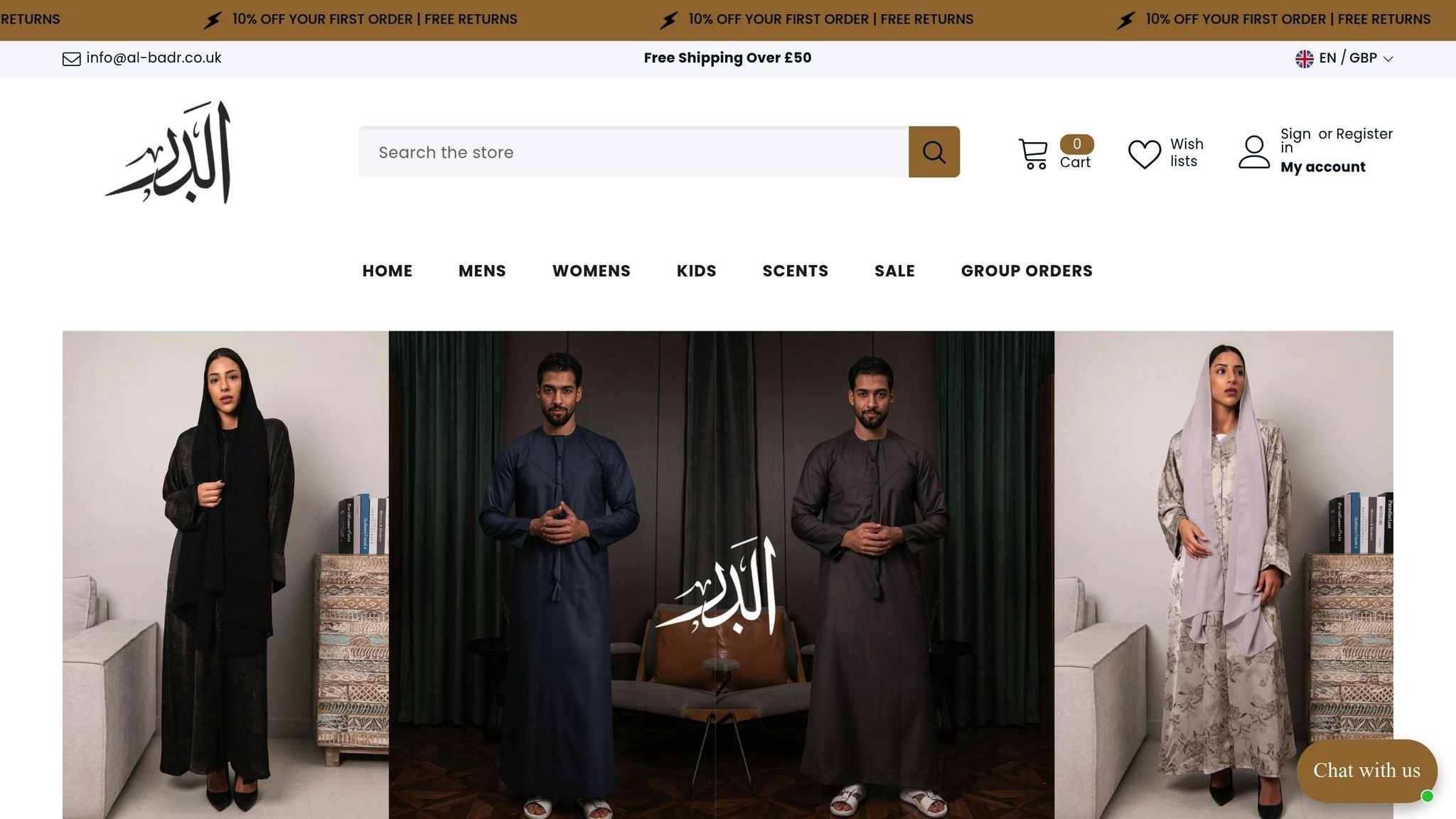
Al-Badr Clothing addresses key concerns like fabric quality and size inclusivity, offering practical solutions tailored to the needs of modest fashion shoppers in the UK. By focusing on these aspects, the brand meets the expectations of a growing audience that values both style and substance.
Quality Fabrics and Size Inclusivity
To tackle concerns about fabric transparency, Al-Badr Clothing uses premium Korean and Japanese cotton. These fabrics are not only high-quality but also opaque, ensuring they meet modesty requirements. This is particularly important for shoppers who have experienced disappointment with items that failed to align with their expectations, as mentioned earlier.
In addition to fabric quality, the brand offers a diverse range of sizes to cater to different body types. This ensures that customers can find garments that fit perfectly straight out of the package. With 78% of British Muslim women preferring to shop in-store to assess fabric and fit, Al-Badr Clothing’s commitment to meeting these needs is a significant advantage.
This dedication to quality and inclusivity extends into their culturally inspired collections.
Collections Reflecting Emirati and Moroccan Influences
Al-Badr Clothing’s product line includes abayas, thobes, djellabas, and mukhawaras, blending traditional designs with modern trends. Their Emirati-inspired abayas and Moroccan-style djellabas are particularly appealing to the 84% of British Muslim women who want to stay on-trend while maintaining modesty. As Farida, a customer, explained:
"I want to wear what's trendy and in style, but with a modest twist. It's about fashion first."
These collections see heightened demand during occasions like Ramadan and Eid al-Adha, when traditional styles play a key role in religious and cultural celebrations. By offering authentic designs rather than poorly adapted alternatives, Al-Badr Clothing addresses the concerns of the 63% of Muslim women who believe UK high street brands fail to fully understand their needs.
Beyond design and authenticity, Al-Badr Clothing also appeals through its accessible pricing.
Affordable Pricing and Customer Perks
Al-Badr Clothing offers competitive pricing, with abayas starting at £27.99. Other items, such as thobes (£19.99–£32.99), djellabas (£49.99), and mukhawaras (from £19.99), are priced to suit a range of budgets. The brand also provides first-order discounts and free returns, making online shopping less risky for customers.
This pricing strategy is designed to attract shoppers with considerable purchasing power, a group that has often been overlooked by mainstream retailers. By combining affordability with quality and style, Al-Badr Clothing positions itself as a go-to option for the UK’s modest fashion market.
sbb-itb-81d10cb
Why UK Shoppers Choose Modest Fashion
UK consumers are increasingly drawn to modest fashion, not just for its practicality but also for its alignment with personal and ethical values. These styles address common wardrobe challenges while offering a unique way to express identity and principles.
Practical Options for Different Occasions
For many shoppers, modest fashion solves everyday clothing dilemmas. In professional settings, these garments offer a versatile and respectful choice. This is particularly evident among British Muslims, with 38% of white-collar workers in this demographic valuing modest options for the workplace. Farrah Storr, Editor at Cosmopolitan, captured this sentiment when she shared:
"I settled on tuxedo shirts and white trainers - a sort of sexless template for my work persona."
Seasonal practicality is another draw. During autumn and winter, mainstream retailers naturally cater to modest preferences with longer sleeves, higher necklines, and warmer fabrics. In fact, three-quarters of British Muslim women take advantage of this seasonal shift to stock up on clothing. Beyond traditional attire, the market now includes modest activewear and swimwear, such as burkinis, allowing women to comfortably engage in fitness, social events, and even life milestones without compromising their preferences.
But modest fashion isn’t just about functionality - it’s also a deeply personal choice.
Clothing That Reflects Personal and Religious Values
For many, modest fashion is a way to express identity and uphold values while staying stylish. The idea of modesty varies from person to person. Some choose looser-fitting garments to avoid objectification, prioritising comfort and personal values over fleeting trends. As one shopper, Tasmia, explained:
"I want my outfit to represent what matters most to me and one of those factors is my modesty."
This sentiment resonates strongly with younger generations. With 1 in 10 Gen Z individuals in the UK identifying as practising Muslims and 84% of British Muslim women actively seeking fashionable modest options, the demand for on-trend yet value-aligned clothing continues to grow.
Supporting Ethical and Accessible Fashion
Modest fashion is also reshaping the UK fashion industry with its inclusive and ethical focus. Major retailers like John Lewis and ASOS have embraced modest collections as part of their broader commitment to diversity. Jo Bennett, Head of Womenswear Buying at John Lewis & Partners, emphasised this approach:
"We are focused on positive change and improving the diversity of choice and inclusivity in our womenswear ranges and we believe that modest dressing is important to many of our customers."
Ethical considerations extend beyond design to production practices, with some brands opting for sustainable fabrics and carefully vetted factories. Accessibility has also improved, with 44% of 18 major UK high-street retailers now offering modest clothing options. These collections eliminate the need for excessive layering by providing garments with suitable necklines, sleeves, and opacity.
What’s more, modest fashion appeals to a wide audience. Writer Sarah Al-Zaher summed it up well:
"Modest fashion is for people who just choose to show less. It is also for people who just prefer the 'relaxed' or the 'oversized look'."
These combined factors ensure that modest fashion not only meets diverse needs but also contributes to a more inclusive and ethically aware fashion scene in the UK.
Conclusion: What's Next for Modest Fashion in the UK
Modest fashion in the UK is evolving quickly, fuelled by a younger generation with both the buying power and a strong sense of style. As Alia Khan, Founder and Chairwoman of the Islamic Fashion Design Council, explains:
"They're not doing it to impress anyone, so there's no passing fancy, there's no fad involved in this. They're first and foremost doing this because of their values and belief set, which are going to stay with them for life."
This shift in the UK aligns with global trends, pointing to a growing market for modest fashion worldwide. The combination of increasing demand and stronger financial independence among these consumers suggests a solid foundation for long-term growth.
Yet, challenges remain. A striking 9 in 10 Gen Z Muslim women report frustration with the lack of stylish, modest options on the high street. This gap represents a chance for brands to step up by offering collections that meet these shoppers’ expectations - think year-round availability, high-quality fabrics that ensure proper coverage, and designs that embrace mainstream fashion while respecting modesty. Moving away from outdated stereotypes and ethnic clichés is key.
Brands like Al-Badr Clothing are already addressing these needs. By using premium materials such as Korean fabric and Japanese cotton, offering inclusive sizing, and drawing inspiration from Emirati and Moroccan styles, they cater to a modern, diverse audience. With perks like free returns and discounts on first orders, they make modest fashion more accessible and budget-friendly for UK shoppers.
As the industry grows, the brands that prioritise both style and quality will stand out. The future of modest fashion in the UK depends on recognising this vibrant market and treating it with the same creativity and attention as any other fashion segment.
FAQs
What is driving the rise of modest fashion in the UK?
Modest fashion is gaining momentum in the UK, fuelled by the nation's increasing cultural diversity and a stronger demand for clothing that respects a variety of personal, religious, and cultural preferences. This shift is particularly noticeable among Muslim women and others who value stylish yet modest apparel that reflects their principles.
Changing societal attitudes have also played a big part in bringing modest fashion into the mainstream. Celebrated for its blend of practicality and style, it has become a modern wardrobe staple for many. Social media has further amplified this trend, with influencers and brands showcasing how modest styles can be both chic and functional.
UK-based brands and designers are stepping up to meet this demand, bridging a gap in the market by offering a broader range of modest clothing options. This growing availability is making it easier than ever for consumers to find fashionable pieces that align with their preferences.
What impact has the pandemic had on the growth of modest fashion in the UK?
The pandemic has played a major role in boosting the popularity of modest fashion in the UK, largely by speeding up the shift towards inclusivity and personal comfort. As more people openly embrace their diverse cultural and religious identities, the demand for stylish, versatile clothing that provides greater coverage has grown steadily.
Lifestyle changes, like the rise of remote working and the focus on comfort, have also encouraged consumers to opt for modest styles that combine practicality with a touch of elegance. Social media has been a powerful driver of this trend, with influencers and brands showcasing contemporary modest outfits that appeal to a broader audience. This visibility has helped modest fashion move from a niche market to a key part of the UK’s mainstream fashion scene, highlighting a wider acceptance of diversity and self-expression.
What difficulties do shoppers face when looking for modest fashion in the UK?
Shoppers looking for modest fashion in the UK often encounter hurdles, particularly when it comes to finding options on the high street. Even though demand is on the rise, mainstream retailers tend to fall short in offering stylish choices that cater to diverse needs, leaving many consumers struggling to find clothing that matches both their taste and values.
Adding to the challenge is the lack of representation of modest fashion within the broader industry. Major brands often overlook this market, pushing shoppers towards niche or online retailers to meet their needs. On top of that, societal misconceptions about modest dressing can create additional obstacles, making it even more difficult for individuals to access clothing that feels right for them.