


Why Tailoring Makes a Difference in Modest Menswear
Finding modest menswear that fits well and aligns with Islamic principles can be tricky. Off-the-rack options often lack the right fit or fail to meet religious guidelines. Tailoring solves this by customising garments like thobes and jubbas to ensure they are comfortable, functional, and meet modesty standards. Key benefits include:
- Better Fit: Tailored clothing addresses issues like loose collars, baggy sleeves, or improper shoulder alignment.
- Preserving Modesty: Adjustments ensure garments follow Islamic guidelines, such as ending above the ankles and maintaining a loose fit.
- Increased Confidence: Well-fitted clothing combines comfort with a polished appearance, supporting daily activities while adhering to faith.
Whether you choose a local tailor or an online service, investing in tailored modest wear ensures your clothing reflects both your values and personal comfort.
Benefits of Tailoring for Modest Menswear
Better Comfort and Fit
Standard sizes for off-the-rack clothing rarely align with real body proportions. This often results in issues like baggy sleeves, tight seams across the chest, or waistbands that don’t sit right. Tailoring solves these problems by accommodating individual measurements - such as waist-to-hip ratios, torso length, and arm dimensions.
For garments like thobes and jubbas, the shoulder fit is especially important. When the shoulders are properly aligned, the entire piece falls neatly, creating the clean lines that modest menswear is known for. Tailors also fine-tune details like sleeve openings and wrist sizes, ensuring a balanced look and avoiding excess fabric or tightness. As Rex Cox Menswear explains:
"Properly tailored menswear isn't solely about aesthetics; it's about function, too. Ill-fitting clothing can restrict movement and cause discomfort." – Rex Cox Menswear
Maintaining Modesty Through Custom Adjustments
Tailoring doesn’t just enhance fit; it also ensures modesty is respected. By addressing specific needs, tailoring helps turn religious guidelines into wearable solutions. Adjustments prevent garments from riding up or slipping too low, preserving the intended silhouette and modest appearance.
Tailors can customise the fit to suit personal preferences, whether you prefer a looser or slightly more fitted garment, all while maintaining comfort and modesty. Even small details, such as personalised neck measurements, can make a big difference - avoiding collars that feel overly tight while maintaining a dignified neckline.
Increased Confidence and Style
When modest clothing fits well - with properly aligned shoulders, proportional sleeves, and the right hem length - it conveys a sense of composure and dignity. This isn’t about vanity; it’s about wearing garments that help you move through life with confidence and ease. As one designer aptly puts it, well-fitted modest clothing acts as a "uniform of quiet sophistication".
The psychological benefits are noticeable. Leah Nalepa, Certified Personal Stylist at America's Future, highlights this point:
"A well-tailored outfit not only looks elevated and intentional, but also feels comfortable and allows for better movement." – Leah Nalepa, Certified Personal Stylist, America's Future
This balance between structure and flow ensures your clothing supports your daily activities - whether you’re attending prayers, working, or travelling - while reinforcing your connection to Islamic principles. Tailoring bridges practicality with elegance, making it an essential part of modest menswear.
sbb-itb-81d10cb
Tailoring Techniques for Modest Menswear
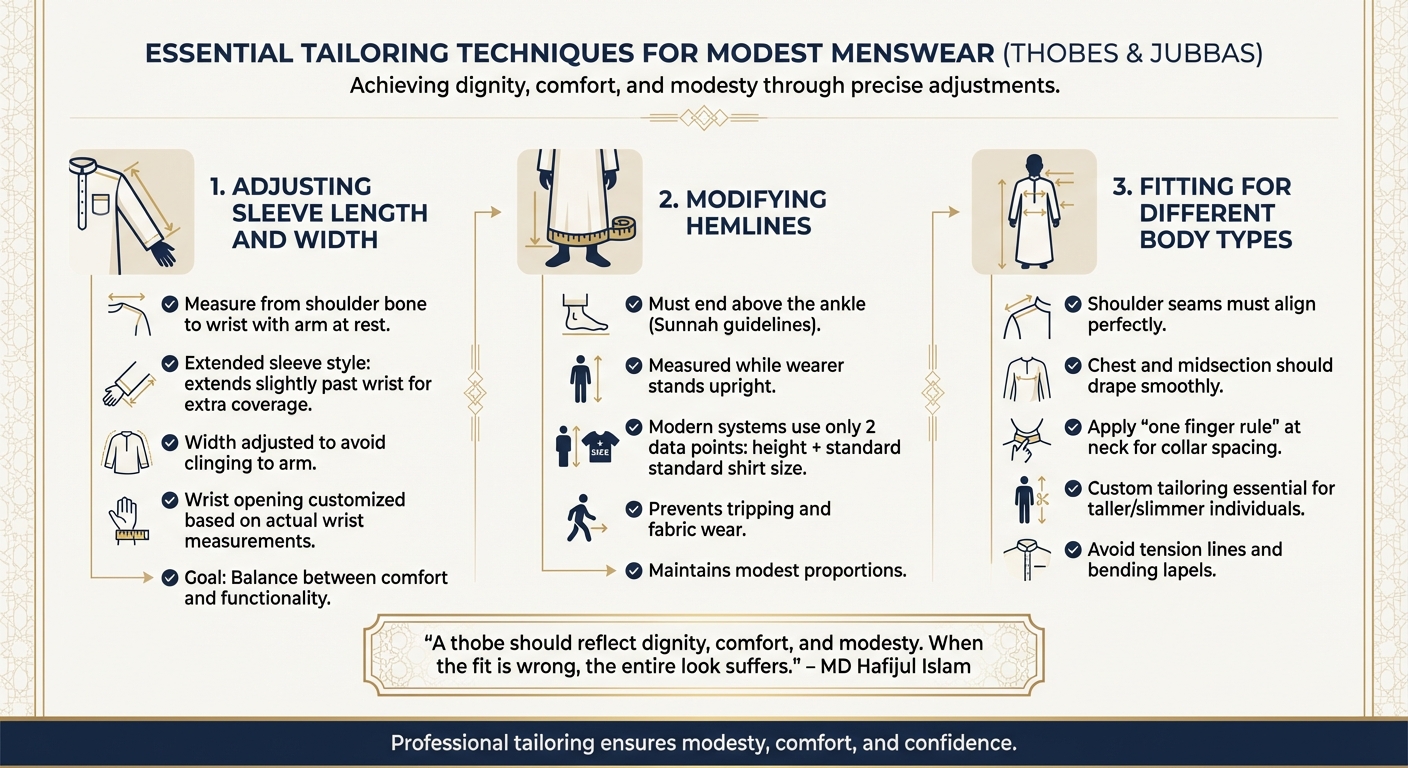
Essential Tailoring Techniques for Modest Menswear: Sleeves, Hemlines, and Body Fit
Adjusting Sleeve Length and Width
Getting the sleeves right can make a big difference in modest menswear. The process starts with measuring from the shoulder bone down to the wrist while the arm rests naturally at the side. For thobes, many prefer an "extended sleeve style", where the sleeve extends slightly past the wrist, offering extra coverage that aligns with modesty principles.
The sleeve's width matters just as much. Tailors adjust the circumference to ensure the fabric doesn’t cling too closely to the arm, preserving the dignified silhouette essential to modest menswear. The wrist opening is also customised, based on actual wrist measurements, to strike a balance between comfort and functionality. This avoids both restrictive fits and excessive looseness, which could interfere with daily activities like prayer. For traditional garments, these precise adjustments ensure a polished and practical fit.
Modifying Hemlines
Beyond sleeves, the garment's length plays a crucial role. Hemline adjustments are made to ensure thobes and jubbas adhere to Sunnah guidelines, which recommend the garment ends above the ankle. Following this guideline not only maintains modest proportions but also prevents practical issues like tripping or fabric wear.
Tailors achieve the correct length by measuring the garment while the wearer stands upright, ensuring accuracy. Modern tailoring systems simplify this process by using just two data points - height and standard shirt size - to calculate full garment dimensions. This reduces the need for multiple fittings while ensuring the hemline is just right. Once both sleeve and hem adjustments are perfected, the focus shifts to tailoring for individual body shapes.
Fitting for Different Body Types
Tailoring modest menswear for various body types requires attention to detail. Shoulder seams should align perfectly to avoid bunching, while the chest and midsection should drape smoothly for a clean, modest appearance. MD Hafijul Islam, the founder of Sunaan.com, highlights the importance of fit:
"A thobe should reflect dignity, comfort, and modesty. When the fit is wrong, too tight, too loose, too short, or too long, the entire look suffers." – MD Hafijul Islam, Founder, Sunaan.com
An ill-fitting garment can cause issues like tension lines or bending lapels, which disrupt both comfort and the intended modest silhouette. To ensure proper collar spacing, applying the "one finger rule" at the neck is a reliable method. For taller or slimmer individuals, custom tailoring is especially helpful, as standard sizes often result in garments that are too baggy or too short, failing to provide the desired look and fit.
How to Choose Tailoring Services for Modest Menswear
Tailoring can elevate modest menswear, ensuring it meets both functional needs and religious guidelines. Here's how to find a tailor who can strike this balance.
Finding Experienced Tailors
Look for tailors with expertise in traditional Islamic garments like Thobes, Jubbas, and Kurtas, as well as a solid understanding of Islamic dress codes. This ensures they respect both the technical and cultural aspects of modest menswear.
Local mosques, Islamic centres, and directories such as Zabihah.com or the Muslim Directory (UK) are great starting points. For instance, East London boasts reputable options like Mehak Tailors and Tayyab Tailors in Waltham Forest.
Before committing to major alterations, test a new tailor with a simple task, such as hemming chinos. This typically costs between £10 and £40 and provides a low-risk way to assess their craftsmanship and attention to detail.
Checking Quality and Materials
A good tailor ensures garments remain durable and well-fitted over time. One sign of quality is the seam allowance - extra fabric left inside the seams - which allows for future adjustments if your size changes. Skilled tailors also choose fabrics that align with Islamic guidelines, avoiding prohibited materials and prioritising breathable, sturdy options.
When reviewing a tailor’s work, pay attention to neat stitching and alterations that maintain the garment’s original proportions. Ask about their fabric sources and how they incorporate traditional styles with modern touches. This will help you determine their expertise in modest menswear.
As Dominic Seabag-Montefiore, Creative Director of Savile Row, puts it:
"You should be seeing a good tailor who knows how to alter a suit and knows what needs doing better than you do - or you are likely in for trouble." – Dominic Seabag-Montefiore, Creative Director, Savile Row
Local vs Online Tailoring Options
Once you've assessed a tailor’s skills and quality, think about whether local or online tailoring suits your needs better. Each has its own benefits.
Local tailors offer in-person fittings, making it easier to evaluate fabric quality and test the fit. They’re also ideal for quick tasks, often completing them within a day or two, and they help foster a sense of community.
Online services, on the other hand, provide convenience and access to specialised modest wear brands. Platforms like Sunaan and Anaqah Madinah simplify the process, often requiring just your height and shirt size to create a tailored fit. For example, Sunaan’s two-step system ensures Thobes meet Sunnah guidelines by sitting above the ankle. Many online providers also offer perks like free worldwide shipping on bulk orders (three or more Thobes), though individual orders may include shipping fees. Keep in mind that custom items are typically non-returnable unless defective.
MD Hafijul Islam, Founder of Sunaan, highlights the importance of tailoring expertise:
"The expertise of Muslim tailors is reflected when the clothes they craft follow religious guidelines and the individual style of the wearer." – MD Hafijul Islam, Founder, Sunaan
Deciding between local and online services comes down to your priorities. If you prefer in-person feedback and the ability to inspect fabrics, a local tailor is the way to go. But if you value the ease of ordering from home and want access to specialised brands, online tailoring might be a better choice. Either way, make sure your tailor understands Islamic modesty requirements and has a proven track record with traditional garments.
Conclusion
Main Points
When it comes to tailoring modest menswear, the benefits go beyond just meeting Islamic guidelines. Properly tailored thobes and jubbas ensure smooth sleeves, neatly aligned hemlines, and a fit that strikes the perfect balance between comfort and modesty. The loose-fitting designs not only adhere to religious principles but also gently conceal the body's form, offering a sense of ease and confidence.
Tailored clothing also delivers a level of comfort that off-the-rack options simply can't match. Features like precise shoulder alignment, a natural neckline, and sleeves tailored to your proportions allow for unrestricted movement and a better overall fit. Unlike mass-produced garments made to suit a general size range, bespoke tailoring is all about creating clothing that fits you perfectly.
Why You Should Invest in Tailored Clothing
Choosing tailored modest menswear is an investment in comfort, durability, and self-assurance. Bespoke garments, crafted to your exact measurements, eliminate the discomfort of ill-fitting clothes and boost confidence. While the upfront cost may be higher than off-the-rack options, the superior craftsmanship and durability ensure long-term value. These garments are not just about style - they're about supporting your values and meeting your everyday needs.
Whether you visit a local tailor for an in-person fitting or use a reliable online service, bespoke tailoring offers a wardrobe that aligns with both your faith and your desire for comfort. It’s a practical and meaningful way to ensure your clothing reflects both your spiritual and personal priorities.
FAQs
How does tailoring improve the fit and comfort of modest menswear?
Tailoring plays a key role in making modest menswear align perfectly with your individual measurements, offering a fit that feels effortless and comfortable. Adjustments such as precise sleeve lengths, well-aligned shoulders, and balanced hemlines not only add to your comfort but also uphold the modesty emphasised by Islamic principles.
When garments like Thobes and Jubbas are tailored, they deliver a refined appearance that mirrors your personal style while remaining practical and easy to wear. These customisations not only enhance confidence but also allow traditional clothing to blend seamlessly with modern standards of functionality and sophistication.
What tailoring adjustments ensure modesty in menswear?
Tailoring adjustments are essential for ensuring modesty in menswear while maintaining comfort and style. Key changes often include shortening hemlines so that garments rest just above the ankle, modifying sleeves to offer proper coverage and allow ease of movement, and achieving a fit that avoids being overly tight or excessively loose, ensuring the body’s shape remains discreet.
Attention to these details allows tailored pieces like Thobes and Jubbas to deliver a polished, functional fit that respects Islamic modesty principles while reflecting individual preferences.
Why is tailored modest menswear a better choice than ready-made options?
Opting for custom modest menswear provides a fit that’s designed specifically for you, balancing comfort with Islamic modesty principles. Unlike standard clothing sizes found in stores, tailored garments are crafted to match your exact measurements and personal preferences.
With tailoring, you can make precise adjustments - like altering sleeve lengths or hemlines - to ensure your outfit fits perfectly while respecting modesty guidelines. This level of detail not only improves the practicality and appearance of your clothing but also boosts your confidence, offering a personalised touch that reflects both quality and individuality.