


Why Quality Stitching Matters in Modest Clothing
Investing in quality modest clothing like Abayas, Thobes, and Hijabs ensures durability, comfort, and reliable coverage. Poor stitching can lead to weak seams, fraying, and uneven finishes, which compromise both the garment's appearance and functionality. High-quality stitching, reinforced seams, and proper edge finishing enhance the lifespan of garments, keeping them intact through daily wear and washing.
Key Takeaways:
- Weak seams: Cause gaps, seam slippage, or popping under stress.
- Fraying edges: Result from unfinished fabric, reducing garment longevity.
- Uneven stitching: Distorts fit and appearance, affecting drape and comfort.
- Reinforced techniques: Double-stitching and bar-tacking prevent seam failure.
- Inspection tips: Look for straight, dense stitches and aligned patterns.
Caring for garments properly - gentle washing, air drying, and regular maintenance - further preserves their stitching and structure. Quality stitching is a smart choice for modest clothing, combining durability with elegance.
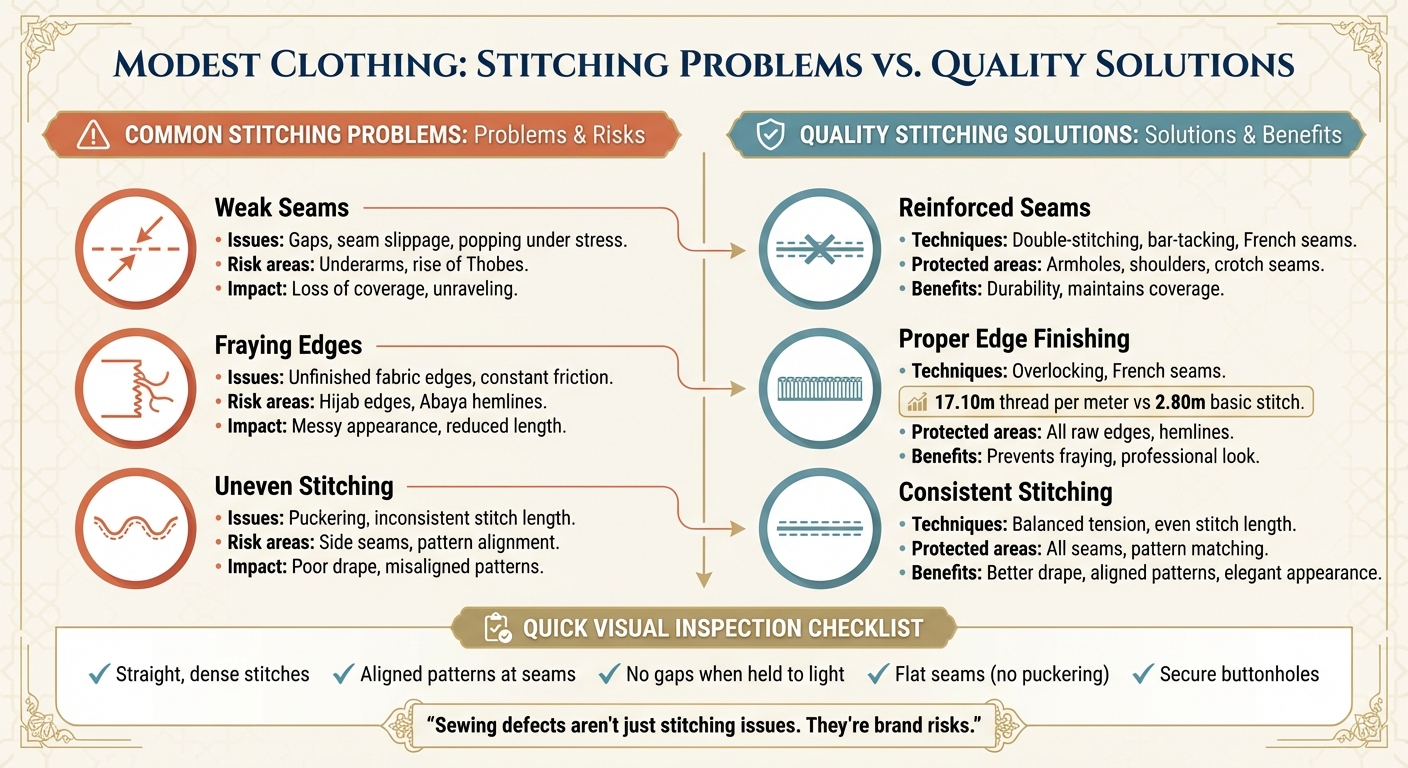
Common Stitching Problems vs Quality Stitching Solutions in Modest Clothing
Common Stitching Problems in Modest Clothing
The quality of stitching plays a huge role in ensuring both the durability and modesty of clothing. When faults like weak seams or uneven stitching occur, they’re not just cosmetic flaws - they can affect a garment's longevity and its ability to provide proper coverage. Let’s dive into some common stitching issues and their impact on functionality and modesty.
Weak Seams and Coverage Issues
Weak seams are a major problem, especially in areas that endure a lot of tension, like the underarms of Abayas or the rise of Thobes. Skipped or broken stitches can create gaps in the seams, making them prone to popping or bursting under stress. Everyday movements like bending or sitting only add to this strain, and even a single missed stitch can weaken the entire seam, increasing the risk of unravelling and loss of coverage.
Another issue is seam slippage, particularly in lightweight or silky fabrics. This occurs when the fabric yarns shift away from the seam under tension, leaving open gaps even if the thread itself holds up. If you notice visible pulling at the seams, it’s a clear sign that the garment’s durability has been compromised.
Fraying and Loose Threads
Unfinished edges are particularly problematic in longer garments. Without proper finishing techniques like overlocking or bound seams, the fabric edges are prone to fraying. This is especially noticeable in Hijabs or the long hemlines of Abayas, which experience constant friction during wear. Over time, fraying not only gives the garment a messy appearance but can also shorten its length, reducing its ability to provide the intended coverage after repeated washes.
Uneven Stitching and Poor Fit
Uneven stitching can ruin both the look and functionality of modest clothing. For example, seam puckering creates a wavy, rippled effect along the seam, which distorts the drape of garments like Abayas. This often happens when thread tension is too high, causing the fabric to bunch or gather along the seam line. The result? A garment that doesn’t hang properly and looks poorly made.
"Sewing defects aren't just stitching issues. They're brand risks." – ABC Seams
Inconsistent stitch lengths, often referred to as uneven stitching, are another common issue. This not only affects the garment's structural integrity but also its appearance. In patterned clothing - like Abayas or Hijabs with prints or stripes - such inconsistencies can result in misaligned designs at the seams, disrupting the overall aesthetic and making the craftsmanship appear subpar.
These stitching problems highlight the importance of precision and quality in garment construction. After all, modest clothing isn’t just about style - it’s about function and reliability too.
sbb-itb-81d10cb
How Quality Stitching Improves Modest Clothing
Now that we've discussed the problems caused by poor stitching, let’s explore how proper techniques can address these issues and elevate the quality of modest garments. These solutions directly tackle the vulnerabilities we outlined earlier.
Reinforced Seams for Durability
The difference between garments that last and those that fail quickly often lies in their stitching. Techniques like double-stitching and bar-tacking in high-stress areas - such as the armholes of Abayas, the crotch seams of Thobes, and pocket openings - are essential. These methods strengthen seams, allowing them to handle the demands of daily movement without splitting or creating coverage gaps.
For load-bearing seams like shoulders, side seams, and hemlines, French seams or bound seams are a must. Basic serged edges simply don’t hold up well under frequent wear, especially for garments designed for modesty, where maintaining structure and coverage is non-negotiable.
A special mention goes to reinforced shoulder seams, which are crucial for preventing garments from stretching out over time. This ensures that your Abaya or Thobe retains its original shape and drape, even after months of regular use. For modest clothing, where the silhouette plays a key role in the garment's purpose, this is particularly important.
Next, let’s consider how proper edge finishing contributes to garment integrity.
Proper Hemming and Edge Finishing
Edge finishing, such as overlocking or French seams, directly combats the fraying issues we discussed earlier. These techniques protect raw fabric edges from unravelling during frequent wear and washing, which is critical for keeping modest clothing intact. Without this protection, seams are prone to seam slippage, where the fabric shifts under stress even if the stitching holds.
What sets quality finishing apart is the amount of thread used. For example, a 1-metre overlock seam uses approximately 17.10 metres of thread, compared to just 2.80 metres for a basic lockstitch. This extra thread forms a protective barrier that keeps edges secure and prevents the thinning or holes that could compromise modesty.
Proper hemming also ensures a polished and professional look. Clean, consistent finishing adds a touch of elegance expected in quality Islamic fashion. French seams, which encase raw edges within a fold of fabric, not only strengthen the garment but also provide a soft feel against the skin, avoiding irritation from frayed threads while maintaining a refined appearance.
Consistent Stitching for Better Appearance
Consistent stitching plays a dual role: improving both the garment’s appearance and its fit. Even stitch length and straight seam lines prevent puckering and rippling, which can distort the drape of flowing garments like Abayas. When thread tension is balanced, the fabric hangs smoothly, preserving the graceful silhouette central to modest fashion.
This consistency also enhances durability. Proper thread tension prevents weak points that could fail under stress, while ensuring the garment keeps its shape through repeated wear. For modest clothing, which often requires freedom of movement, seams need a slight elasticity to avoid thread breakage during everyday activities.
Another hallmark of quality stitching is pattern alignment. When stripes, checks, or prints match perfectly at the seams, it’s a clear sign of careful construction. This attention to detail is especially noticeable in patterned Abayas or Hijabs, where misaligned designs can immediately detract from the garment’s overall appeal.
"The seams of a garment are generally a fail-proof indicator of its quality, because although they are hugely important for the durability and shape of a garment, the average shopper will typically pay little attention to them." – Anuschka Rees, Author and Style Expert
Consistent stitching doesn’t just prevent issues - it creates garments that look elegant, last longer, and provide the reliable coverage essential in modest fashion. It’s about blending durability with aesthetics to meet the unique demands of these garments.
How to Identify Quality Stitching When Shopping
Understanding how to spot quality stitching is key to making smart choices when buying garments. By identifying these details, you can ensure your clothing not only lasts longer but also maintains its modest appearance. Whether you're shopping in-store or browsing online, paying attention to stitching can help you invest in well-made pieces that stand the test of time.
Visual and Physical Inspection
When examining garments like Abayas, Thobes, or Hijabs in person, start by inspecting the seam lines. High-quality stitching will have straight, evenly spaced lines that run parallel. If the stitches are crooked or uneven, it’s often a sign of poor craftsmanship. To test the seams further, hold the garment up to a bright light and gently pull the fabric on either side of a seam. Well-made seams should show little to no light passing through. If you spot gaps or holes, it likely means the stitches are too far apart and may not hold up under wear and tear.
Another important step is to check if the seams lie flat against the fabric. Puckering, bunching, or rippling along the seams could indicate improper thread tension or subpar construction. Turn the garment inside out to examine the stitching more closely - look for loose threads, skipped stitches, or "birdnesting" (messy tangles of thread), all of which point to poor quality control. For Thobes, pay special attention to the buttonholes; they should be tightly stitched and neatly finished.
If the garment has patterns, make sure the stripes, checks, or prints align perfectly at the seams, as this reflects careful attention to detail. Finally, perform a simple pull test by tugging gently on either side of a seam. If the seam opens or gaps appear, it’s a red flag for potential seam failure. These visual checks are a great starting point before diving into product descriptions and reviews.
Using Product Descriptions and Reviews
Shopping online requires a different approach. Product descriptions become your go-to for assessing the garment's construction. Look for terms like "French seams", "bound seams", "reinforced stitching", or "bartacks" in high-stress areas such as shoulders or side seams. These details indicate extra care has been taken to ensure durability. Mentions of "interfacing" in collars or plackets suggest the garment has added internal layers to maintain its shape and resist stretching.
Customer reviews can also be a treasure trove of information. Words like "sturdy", "neatly finished", "heavy material", or "well-made" often signal a durable and thoughtfully constructed garment. For instance, shoppers on Al-Badr Clothing frequently highlight "good quality fabric" and "contrasting thread work" as signs of well-crafted designs. When browsing product images, zoom in to inspect armholes, pocket openings, and side seams for visible reinforcements.
"A sign of poor workmanship is when a garment is made with flimsy, messy stitches... Bad stitching equates to lower durability." – Styled by Science
Different garment styles require specific attention, so let’s break down what to look for in each type.
What to Check in Specific Garments
Each type of modest garment has areas that are more prone to wear and tear, so tailoring your inspection to these key points is crucial.
- Abayas: Focus on shoulder and side seams, as these areas endure frequent movement. Look for French seams and neatly finished hems, especially on delicate fabrics like chiffon or crepe, which can fray easily. Reinforced stitching around the armholes is especially helpful in preventing stretching or gaps over time.
- Thobes: Examine the button placket and collar for signs of interfacing, which helps maintain the garment’s structure even after repeated use. Buttons should be securely fastened with multiple threads, and buttonholes should be densely stitched to keep buttons flat and prevent fabric distortion. Check the crotch and side seams for double-stitching or bartacks, as these areas experience the most stress.
- Hijabs: Pay close attention to the edges. A blind hem or a fine rolled hem works best, as it avoids adding bulk while keeping the fabric's drape intact. Fully finished edges are key to preventing fraying, particularly in lightweight materials.
Caring for Well-Stitched Modest Garments
Taking care of Abayas, Thobes, and Hijabs properly ensures their stitching stays intact and their appearance remains flawless. Even the best-made garments can lose their charm without the right care. Thankfully, adopting a few simple habits can help keep your clothing in top condition for longer.
Washing and Drying
For delicate fabrics like silk or satin, hand washing in cold water is ideal. Limit soaking to no more than 10 minutes to avoid weakening the fibres or threads. If you're washing sturdier materials like polyester or crepe in a machine, place them in a mesh bag and select a delicate cycle with a temperature no higher than 30°C.
Always turn garments inside out and use a mild detergent to protect both stitching and colours. Avoid bleach or harsh chemicals, as they can damage the fabric and compromise thread strength. For silk or satin garments, skip wringing them out - gently roll them in a towel to remove excess water instead.
Steer clear of tumble drying, as the heat and movement can cause shrinking, misshapen garments, and loosened stitching. Instead, hang your clothes on padded hangers in a shaded, airy spot, away from direct sunlight, which can fade darker fabrics and weaken fibres. Lay embellished pieces flat to dry to avoid stretching the seams. These steps will help your garments retain their durability and appearance.
Storage Practices to Prevent Damage
How you store your garments is just as important as how you wash them. Use wide, padded hangers to preserve their shape and prevent those annoying "shoulder bumps". Opt for breathable fabric storage bags instead of plastic ones, which can trap moisture and lead to mildew or weakened fibres. Adding silica gel packets to your storage can help keep humidity at bay. Make sure your wardrobe isn’t overcrowded - giving your clothes some space reduces friction, creasing, and the risk of snagging delicate stitching.
For heavily embroidered or beaded items, folding them with acid-free tissue paper between the layers can protect the intricate details and stop threads from catching. A lint roller is also a handy tool for keeping dust and fluff off darker garments without resorting to frequent washing.
Minor Repairs to Extend Garment Life
Routine maintenance can go a long way in extending the life of your modest garments. Regularly inspect your clothing for loose threads, small seam gaps, or weakening embellishments. Fixing a seam as soon as it starts to pull apart helps maintain the garment's structure. Similarly, if you notice a loose button, sew it back on promptly using matching thread to retain the garment's original look.
For stains, spot-treat the affected area with a gentle stain remover rather than washing the entire garment, which can cause unnecessary wear on the stitching. Dab stains gently with a damp cloth instead of rubbing, as rubbing can spread the stain or damage delicate fibres.
When ironing near repairs or embellishments, always use a pressing cloth and set the iron to its lowest heat setting. Alternatively, a handheld steamer is a gentler way to remove wrinkles. Rotating your wardrobe regularly also helps ensure no single garment gets worn out too quickly.
Conclusion
The stitching of a garment plays a key role in its durability, comfort, and timeless elegance. When done correctly, it ensures that choosing the right Abayas, Thobes, and Hijabs withstand the demands of daily wear and frequent washing, all while maintaining the comfort and coverage that are integral to Islamic fashion. The strength of a seam often depends on details like the density of the stitches and the choice of thread - small factors that make a big difference.
"Quality of sewn products is only as good as the quality of seams." – Apparel Resources
Well-crafted garments resist fraying, hold their shape, and feel smooth against the skin. Tangled threads or rough seams can cause discomfort, especially during movement or prayer, but precise stitching eliminates these issues. Reinforced stress points add extra protection in areas prone to wear and tear, ensuring a garment that’s both durable and graceful.
Neat finishes and perfectly aligned patterns elevate a piece from functional to elegant, creating the clean, seamless lines that define modest fashion.
"A good quality abaya is not just a garment, but a statement of empowerment and grace." – Amanis
At Al-Badr Clothing, every detail reflects a commitment to superior craftsmanship. Seams are reinforced where needed and finished with care, ensuring garments that endure without losing their refined appearance. Opting for quality stitching means fewer repairs, longer-lasting wear, and clothing that stays impeccable through countless washes. It’s a choice that offers both practicality and peace of mind.
FAQs
How can I recognise high-quality stitching in modest clothing?
To spot top-notch stitching in modest garments like abayas, thobes, and hijabs, start by examining the stitch lines. Look for even, consistent stitches with no gaps or uneven patterns - this is a hallmark of skilled craftsmanship. Pay close attention to the seam finishes as well. Techniques such as French seams or double-stitched edges not only conceal raw edges but also add strength and longevity to the garment. Run your fingers along the seams; they should feel smooth and secure, with no loose threads or puckering.
The thread colour is another detail worth noting. It should either blend seamlessly with the fabric or create a clean, intentional contrast. Well-finished edges, like those on cuffs and corners, are also a good indicator of quality. These details help preserve the garment’s modest shape while reducing wear and tear. If you can, gently pull at the seams - they should stay intact without any signs of pulling apart. By keeping an eye on these details, you’ll be able to select garments that are not only stylish but also built to last.
How can I maintain the stitching quality of modest clothing?
To maintain the stitching and overall condition of modest garments like abayas, thobes, and hijabs, follow these practical tips:
- Handle with care when washing: Always check the care label before cleaning. For delicate materials like chiffon or silk, hand-washing is ideal. If you use a washing machine, place the garment in a mesh laundry bag and select a gentle cycle with cold water.
- Choose mild detergents: Use non-bleaching, gentle detergents to avoid weakening the fabric or causing discolouration.
- Air-dry for best results: After washing, reshape the garment and let it dry naturally on a padded hanger, away from direct sunlight. Avoid tumble dryers and wringing the fabric, as these can strain the seams.
- Be cautious with ironing or steaming: Use a cool iron or a garment steamer to smooth out creases without damaging the stitching. High temperatures can weaken the threads.
- Store thoughtfully: Hang these garments on wide, padded hangers or store them in breathable garment bags. Avoid folding over seams to minimise stress on the stitching.
By treating your garments gently and keeping an eye out for loose threads, you can maintain their elegance and durability for years to come.
Why is high-quality stitching essential for the durability of modest clothing?
High-quality stitching plays a key role in prolonging the life of garments by strengthening the seams. This added durability helps modest clothing like Abayas, Thobes, and Hijabs retain their shape, structure, and elegance, even after frequent use.
Expertly crafted stitching not only prevents fraying but also ensures a comfortable fit, allowing these garments to maintain their modest and polished look. Choosing clothing with durable stitching is a smart way to guarantee both long-lasting quality and value.