


Why Breathable Fabrics Matter in Everyday Thobes
Breathable fabrics are essential for comfortable thobes, especially in the UK's unpredictable weather. These materials help regulate body temperature, wick away sweat, and prevent overheating or clamminess. They are ideal for transitioning between indoor and outdoor environments, whether you're commuting, working, or attending prayers. Cotton, linen, and fabric blends are top choices, offering moisture control and airflow for all-day comfort. Avoid synthetic fabrics like polyester, which trap heat and moisture, leading to discomfort and odours.
Key Points:
- Breathable fabrics improve air circulation and temperature control.
- They wick sweat, keeping you dry and reducing odour.
- Cotton and linen are great for daily wear; blends offer added durability.
- Proper care (washing at 30°C, air-drying) extends fabric life.
Al-Badr Clothing offers affordable thobes (£14.99–£36.99) designed for the UK's climate, with free shipping on orders over £50. Choose breathable materials for comfort and practicality in any season. For more advice, see our guide on choosing the perfect thobe for every occasion.
Common Problems with Non-Breathable Thobes
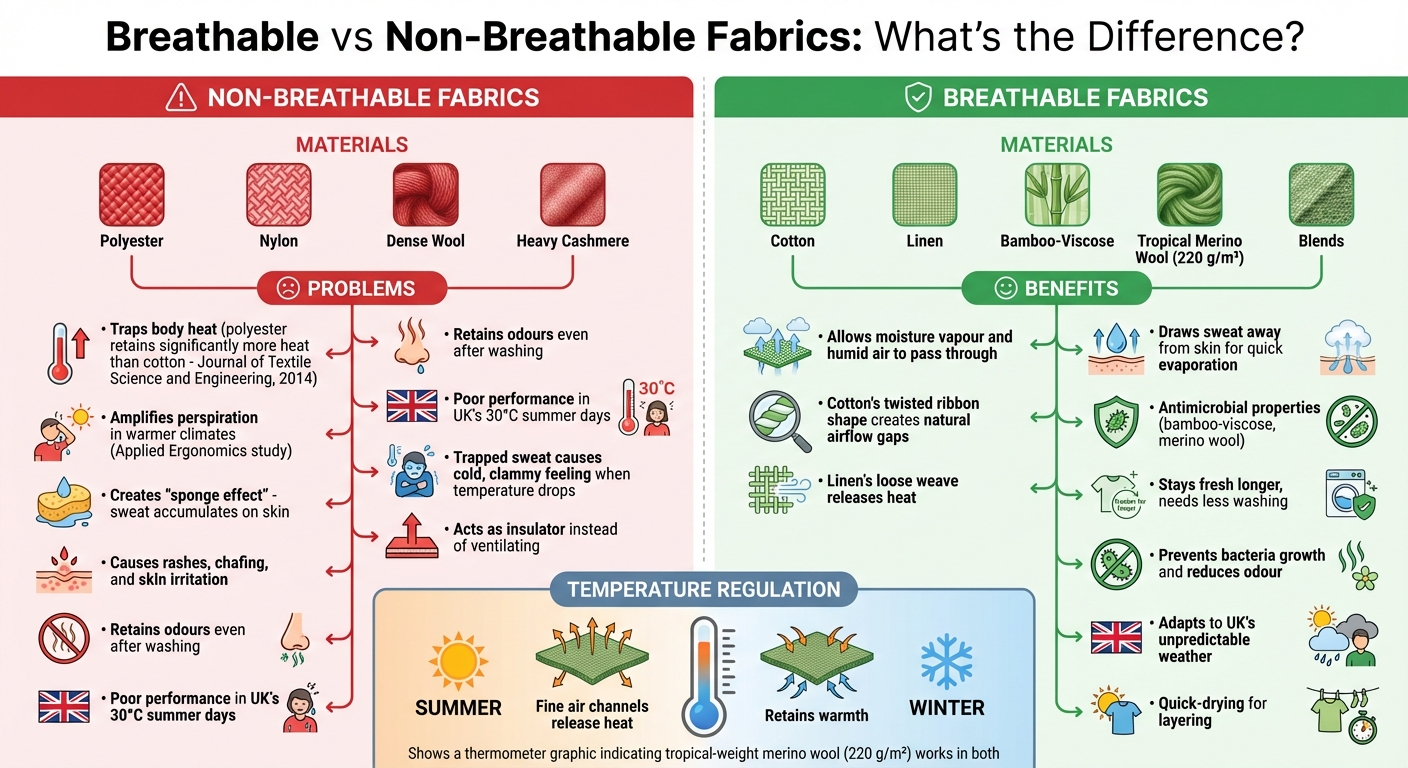
Breathable vs Non-Breathable Thobe Fabrics Comparison
Overheating and Poor Air Circulation
Fabrics like polyester and nylon, known for their non-breathable nature, act as a tightly woven barrier that traps body heat. This forces your body to work harder to cool itself, often leading to excessive sweating and that sticky, uncomfortable feeling. A 2014 study published in the Journal of Textile Science and Engineering highlighted that polyester retains significantly more heat compared to natural fibres like cotton or linen.
In the UK, where summer days can occasionally reach 30°C, heavyweight fabrics like wool or dense cashmere are equally problematic. While these materials are great for winter, they cause overheating in warmer conditions - whether you're in a centrally heated office or crammed on the Tube. Research from Applied Ergonomics also found that synthetic fabrics amplify perspiration in warmer climates when compared to natural alternatives. Clearly, switching to breathable fabrics is key for staying comfortable in such scenarios.
Sweat Buildup and Skin Irritation
When sweat can't evaporate properly, it accumulates on your skin or within the fabric, creating what experts call the "sponge effect." This trapped moisture leads to discomfort, rashes, and chafing, especially during prolonged wear.
Synthetic fibres, unlike natural ones, tend to cling to oils and odours, making them harder to clean thoroughly. Even after regular washing, these fabrics often retain unpleasant smells. The dampness also creates an ideal environment for bacteria, which break down sweat proteins and cause persistent body odour. These issues highlight the importance of breathable materials for maintaining hygiene and comfort.
Poor Performance in UK Weather Conditions
The UK's famously unpredictable weather exposes the flaws of non-breathable thobes. On warm days, these garments trap heat and moisture, leaving you overheated. When temperatures suddenly drop - a common occurrence here - the trapped sweat can leave you feeling cold and clammy instead of comfortable. Non-breathable fabrics simply don't adapt well to the rapid temperature swings and damp conditions that define British weather.
Although some polyester thobes are marketed as "moisture-wicking", many lack the proper engineering to truly manage sweat. Instead of ventilating, they act as insulators, making you feel even warmer when you need airflow the most. These limitations make it clear why breathable fabrics are better suited to handling the UK's erratic climate. Addressing these drawbacks opens the door to exploring how such fabrics can offer practical solutions.
sbb-itb-81d10cb
How Breathable Fabrics Solve These Problems
Better Air Circulation and Temperature Control
Breathable fabrics work by allowing moisture vapour and humid air to pass through, stopping hot air from being trapped near your body. For example, the twisted ribbon shape of cotton fibres creates natural gaps that promote airflow. Similarly, linen's loose weave helps heat escape, keeping you cooler as temperatures rise.
"Breathability means that moisture vapor (basically humid air) flows easily through cotton... This air flow prevents hot air from being trapped near the wearer's body." - UCSB Science Line
What makes these fabrics particularly useful for UK weather is their ability to handle changing conditions. Tropical-weight merino wool, weighing around 220 g/m², features fine air channels that release heat during summer while retaining warmth in winter. This ability to regulate temperature across seasons ensures comfort indoors and outdoors, no matter how unpredictable the weather gets. The enhanced airflow also plays a key role in managing moisture throughout the day.
Moisture-Wicking for All-Day Comfort
Moisture-wicking fabrics are designed to draw sweat away from your skin, allowing it to evaporate quickly. This keeps you dry, cool, and free from discomfort caused by chafing or odour. By staying dry, the fabric creates an environment that discourages bacteria growth, which significantly reduces body odour during long days. Natural materials like bamboo-viscose and tropical merino wool also offer antimicrobial properties, meaning they stay fresh longer and require less frequent washing compared to synthetic options.
These fabrics not only help with temperature control but also adapt well to busy routines and varying weather conditions, providing comfort throughout the day.
Suitable for Different Activities and Climates
In the ever-changing UK climate, breathable fabrics shine by adapting to both daily activities and unpredictable weather. On warm days, they prevent the overheating often associated with synthetic materials. They also work well for layering, drying quickly when worn under outerwear, which helps avoid moisture buildup during colder months.
"The fabric of your thobe controls how cool you stay in a steamy August and how warm you feel during a frosty dawn prayer." - Yalla World
For active lifestyles, bamboo-viscose jersey offers natural stretch and effective moisture control. On the other hand, Japanese tech-poly twill combines breathability with practical benefits like stain resistance and UV protection, making it a great option for frequent travellers or those with demanding schedules. These fabrics are designed to tackle a variety of comfort challenges, making them a reliable choice for everyday wear.
Best Fabric Types for Breathable Thobes
Knowing how to pick the perfect thobe starts with selecting the right fabric for the UK's ever-changing weather.
Cotton: A Reliable Everyday Choice
Cotton is a go-to fabric for daily thobes in the UK, and for good reason. Its natural fibres allow air to circulate freely, helping you stay comfortable whether you're indoors on a warm day or enjoying a mild spring breeze. Plus, cotton absorbs moisture effectively, keeping sweat at bay and ensuring all-day ease.
The fabric's softness is another big win. Cotton is gentle on the skin and suitable for those with sensitivities, making it a popular choice for regular wear. For the UK's unpredictable weather, long-staple Egyptian cotton with a Toyobo finish is particularly well-suited. This Japanese treatment enhances the fabric's breathability for summer while its dense weave provides a touch of warmth during chilly mornings. This adaptability makes cotton an excellent all-rounder.
For something even lighter, linen is a great option.
Linen: Perfect for Hot Days
When the UK experiences those rare but intense heatwaves, linen is the fabric to reach for. Its open weave allows heat to escape quickly, making it one of the most breathable options for warm weather. Linen feels almost weightless and has a naturally textured look that’s effortlessly stylish.
Durability is another strong point - it holds up well over time. However, linen does have a tendency to wrinkle, so you'll need to iron it regularly to maintain its crisp appearance. For summer events or simply staying cool on hot days, linen is hard to beat.
Blended Fabrics: The Best of Both Worlds
Blended fabrics offer a practical mix of comfort and durability, combining the breathability of natural fibres with the resilience of synthetics. For example, cotton-polyester blends are soft, breathable, and resistant to wrinkles, making them ideal for everyday wear in the UK's unpredictable climate.
If you love linen's lightness but dislike the upkeep, linen-viscose blends (often 55% linen, 45% viscose) are a smart alternative. They retain the airy feel of linen while reducing wrinkling and improving how the fabric drapes. For formal occasions, silk-cotton blends offer a balance of ventilation and elegance, making them a refined choice. These blends are also practical, as they prevent lightweight thobes from billowing excessively in windy conditions.
How to Choose Breathable Thobes from Al-Badr Clothing
When selecting a thobe, consider the fabric, design, and overall value to find the perfect fit for your needs.
Focus on Quality Fabric
Start by checking the fabric's description. Look for options with a "Japanese cotton feel" - a luxurious texture that promotes breathability, making it ideal for both daily wear and special occasions. As Imran M. shared:
"Japanese cotton feel is amazing and great style for a special occasion!"
If you're shopping for colder weather, the Winter Emirati collection is a great choice at £36.99, offering added warmth. For everyday wear, standard cotton or cotton-polyester blends provide comfort, durability, and wrinkle resistance.
Once you've chosen the fabric, think about how the design aligns with your lifestyle.
Choose a Design That Fits Your Routine
The design of your thobe should complement your daily activities. For the UK's unpredictable weather, loose-fitting designs work well, allowing for layering without sacrificing comfort. Rebecca S., a satisfied customer, highlighted:
"The Jubba is such a nice dark green and the material looks premium. The fit is perfect, and we usually struggle to find them due to his large chest."
Al-Badr offers a variety of regional styles, including Emirati, Qatari, Bahraini, Omani, and Moroccan designs. Each style features distinct elements like contrasting thread work and varying collar heights. If you lead an active lifestyle, look for a design that allows easy movement while maintaining a traditional aesthetic.
These thoughtful design details strike a balance between practicality and cultural heritage, making it easier to assess the value of your purchase.
Assess Price and Value
Finally, compare the price to the quality to ensure you're getting good value. Al-Badr's breathable thobes are priced between £19.99 and £32.99, with some Emirati styles starting at just £14.99. Signing up for their newsletter gets you 10% off your first order, adding even more value.
Orders over £50 qualify for free 48-hour shipping, and the "Buy it, Try It" policy allows free returns if you're not satisfied. Many customers praise the softness and premium quality of these thobes. Farhan, a repeat buyer, shared his experience:
"Very comfortable, soft, thick and high quality materials. Second purchase from these guys i'll definitely be coming back again."
Maintaining Your Breathable Thobes
Taking care of your thobe properly ensures it stays breathable and lasts longer. Gentle washing and smart storage are particularly important, especially considering the damp climate in the UK.
Washing and Drying Instructions
To keep your thobe in top condition, wash it at 30°C or lower. This helps prevent shrinkage and keeps the fabric flexible, whether it’s made of cotton, linen, or a blend. Stick to a mild, non-biological detergent and avoid fabric softeners - they can coat the fibres, reducing their ability to breathe, especially in polyester blends.
Before washing, turn your thobe inside out and place it in a mesh laundry bag. This reduces friction and prevents snags. For stubborn stains on collars or cuffs, pre-treat them by dabbing with liquid detergent and cool water before tossing the garment in the wash. When it comes to drying, air-drying is a must. Hang your thobe naturally to retain its shape and airflow properties. Instead of wringing, press out excess water with a towel to avoid damaging the fibres. Tumble drying is a no-go, especially for linen thobes. For these, iron them on the reverse side while slightly damp to avoid shine marks.
Once your thobe is clean and dry, storing it correctly is the next step to maintaining its breathability.
Storage Tips for Damp UK Climate
In the UK’s damp environment, storing your thobe in breathable garment bags is essential. Plastic bags trap moisture, leading to mustiness, while breathable options allow proper ventilation. A wardrobe with good airflow is also key to preventing mildew. Use padded or wide wooden hangers to maintain the garment’s shape, steering clear of thin wire hangers that can stretch the fabric or leave rust stains.
To keep your storage space fresh, add cedar balls or lavender sachets. These not only combat damp odours but also act as natural dehumidifiers. Lastly, always ensure your thobe is clean before storage to avoid permanent stains or discolouration.
Conclusion
When it comes to everyday thobes in the UK's unpredictable weather, breathable fabrics are a game-changer. They help manage overheating and sweat while transitioning effortlessly between chilly mornings and warmer afternoons. Materials like cotton, linen, and high-quality blends provide the airflow and moisture control needed to keep you comfortable all day, whether you're commuting, working, or socialising.
Al-Badr Clothing offers Bahraini thobes crafted with premium fabrics, designed specifically to suit the UK's unique climate. These thobes combine top-notch material quality with a fit that’s both practical and stylish, allowing for layering without adding unnecessary bulk. Customers frequently highlight the balance of comfort and functionality in their designs.
To keep your thobes in top condition, wash them at 30°C or lower and store them in breathable garment bags. Following these care tips will help maintain their comfort and durability, ensuring they remain your go-to choice for any season. With the right fabric and proper care, you'll always be prepared for whatever the British weather has in store.
Take advantage of free 48-hour UK shipping on orders over £50 and enjoy 10% off your first purchase. Discover Al-Badr Clothing’s breathable collection and experience comfort that lasts all day, every day.
FAQs
How can I tell if a thobe fabric is truly breathable?
To determine if a thobe fabric is breathable, focus on its material and weave. Natural options like cotton and linen are excellent at allowing airflow and drawing moisture away from the skin, helping you stay cool and dry. Fabrics with a looser weave or lighter weight also enhance breathability. Look for materials specifically designed with moisture-wicking properties and a lightweight structure to ensure comfort, especially in warmer weather.
Which breathable fabric is best for UK weather year-round?
For the UK’s unpredictable climate, long-staple Egyptian cotton treated with Toyobo is a fantastic choice for thobes. This material offers excellent airflow, keeping you cool during the summer while providing enough insulation to stay warm in chillier weather. Cotton's softness, breathability, and hypoallergenic properties make it a comfortable and practical option for everyday wear.
For particularly warm days, linen stands out as another excellent choice. Its lightweight texture and superior airflow make it ideal for staying cool and comfortable.
How do I stop my thobe getting musty in a damp wardrobe?
To keep mustiness at bay, focus on managing moisture and ensuring good airflow in your wardrobe. Aim to keep humidity levels below 55% to prevent mildew and unpleasant odours from developing. Simple tricks can help, like steaming the fabric to refresh it or placing bicarbonate of soda in a bag with the garment to absorb any lingering smells. Proper ventilation is key, and avoid leaving your thobe in damp or humid conditions for extended periods to maintain its freshness.