


The Role of Craftsmanship in Premium Modest Clothing
Craftsmanship is what sets premium modest clothing apart. From hand-embroidered abayas to thobes made with Japanese cotton, these garments combine artistry with quality materials to create wearable investments. Key details like precise stitching, durable fabrics, and traditional techniques ensure these pieces last and look elegant over time. Modern methods, like digital embroidery, blend heritage with efficiency to meet contemporary expectations while respecting the growth of modest fashion. Here's what makes premium modest clothing stand out:
- Craftsmanship: Techniques like Zardozi embroidery and Sfifa threadwork showcase skilled artistry passed down through generations.
- Premium Materials: Fabrics like Nida and Japanese cotton ensure comfort, durability, and a polished look.
- Attention to Detail: Features like reinforced seams, secure embellishments, and smooth finishes highlight quality.
- Fusion of Heritage and Modernity: Combining traditional methods with innovations like laser cutting keeps designs relevant while honouring their roots.
Investing in these garments means choosing quality over fast fashion. They’re not just clothing - they’re a connection to history, values, and the artisans who create them.
Time-Honoured Methods in Abayas and Thobes
The creation of premium abayas and thobes is steeped in centuries-old techniques, reflecting a deep connection to craftsmanship and tradition. These methods, honed over generations, bring a unique blend of elegance, texture, and durability to these garments, making them both visually striking and long-lasting.
Hand Embroidery and Gold Work
Techniques like Zardozi and Sarma stand out as some of the most esteemed forms of goldwork in Islamic fashion. Sarma, a method famously used to craft the Kiswah (the covering of the Ka'aba), involves raising the surface by 1 cm to create a reflective, three-dimensional effect using gold and silver threads. This intricate process relies entirely on the precision of skilled artisans.
To make the Kiswah, an astounding 670 kg of silk and 15 kg of gold thread are required. During the 18th and 19th centuries, embroidery was so highly valued that cities like Istanbul and Cairo supported cottage industries employing over 800 people to produce embroidered garments and ceremonial uniforms. Evliya Çelebi, a 17th-century Turkish traveller, aptly described embroidery as the "craft of the two hands", capturing the physical dexterity and mastery involved.
Another traditional craft, Talli braiding, originates from the United Arab Emirates. This technique involves twisting metallic straw (khus) with silk (brisam) or cotton threads using tools like kajujah and al-arah. Though once at risk of fading as younger generations adopted Western corporate styles, organisations such as the Irthi Contemporary Crafts Council and Al Ghadeer UAE Crafts are working to revive it. Patterns like ain mozah (Mozah's eye, inspired by an oblong pearl) and minsharar (saw-tooth design) carry symbolic meanings, connecting the wearer to their heritage.
Silk Shading and Sfifa Threadwork
Sfifa, a hand-woven braid with origins in 9th-century Andalusia, embodies the fusion of Moorish elegance and Islamic artistry. Artisans craft this braid by manipulating bobbin-wound threads - made of silk, gold, or cotton - on a cylindrical pillow. Beyond its decorative appeal, Sfifa serves practical functions such as reinforcing garment edges, supporting fastener openings, and concealing seams.
"When we wear sfifa, we are wearing more than beauty. We are wearing our ancestors' dreams".
These words from Laila, a bride from Marrakech, highlight the cultural and emotional weight of this craft. The artistry of Sfifa cannot be replicated by machines without losing the "soul" imparted by human hands. As Fatima, a Sfifa artisan, eloquently put it:
"This craft is my prayer. Each thread must carry beauty, or it carries nothing at all".
High-quality modest garments also incorporate braylsam (silk threads) for silk shading, which adds a luminous, multi-tonal finish to the fabric, enhancing its depth and visual appeal.
To spot genuine craftsmanship, examine the embroidery for a flawless finish on both sides and consistent stitching. Hand-woven Sfifa is often dyed in small batches, creating subtle colour variations that machine-made versions cannot replicate. These painstaking techniques not only ensure durability but also enrich the garment with a sense of history and artistry. Traditional methods like these form the backbone of premium modest fashion, elevating it to an art form.
sbb-itb-81d10cb
Premium Materials in Modest Garments
The essence of modest wear lies in its craftsmanship, but the choice of fabric elevates it to a timeless piece. The fabric determines not just how the garment looks, but how it feels and lasts. As Mariam's Collection puts it, “High-end abayas are designed to be timeless investments, not disposable fashion pieces”. This commitment to quality is reflected in the thoughtful use of premium materials explored below.
Korean Fabric and Japanese Cotton in Al-Badr Clothing
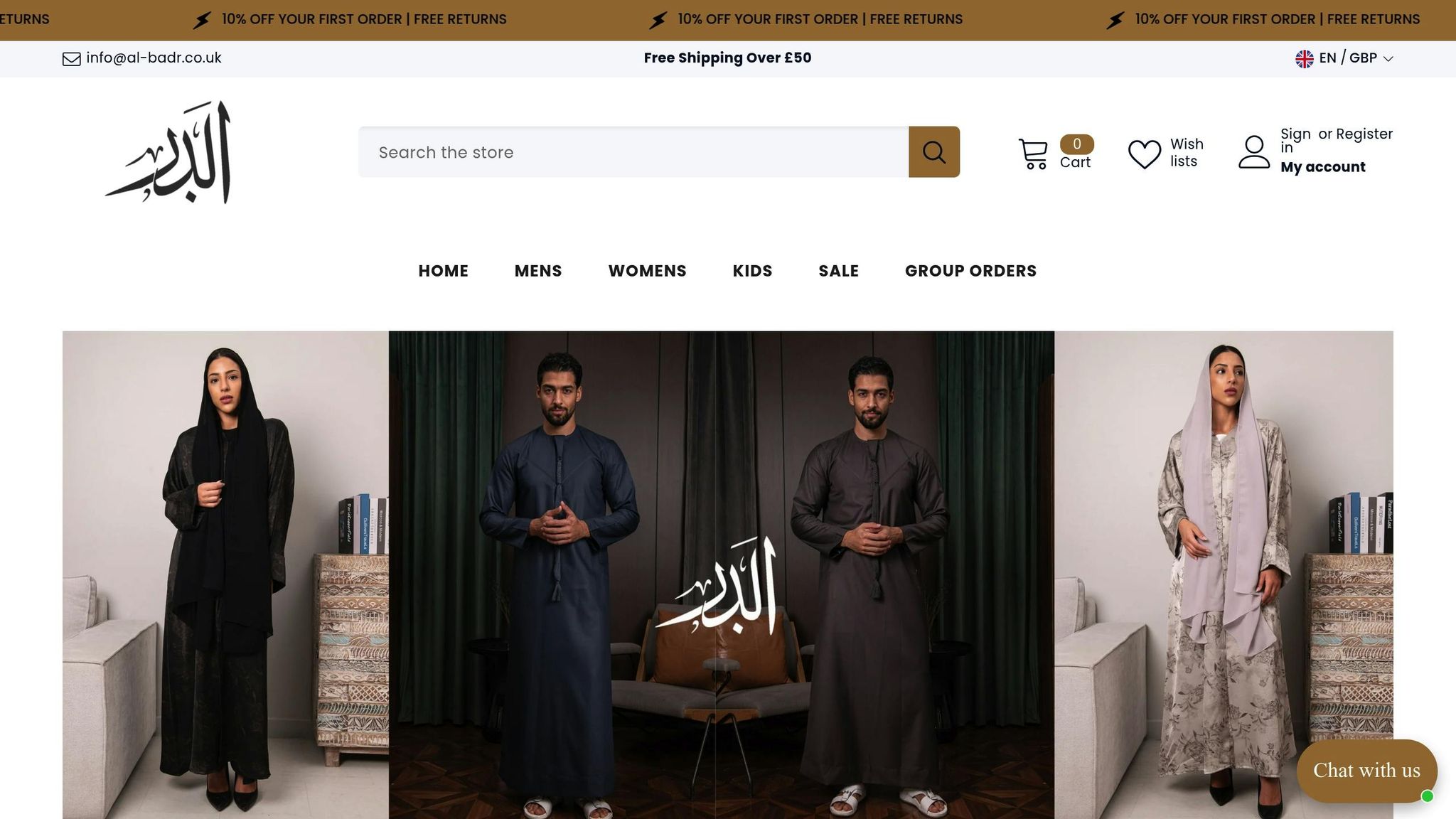
Nida fabric, sourced from specialised mills in Japan and South Korea, has become the hallmark of luxury abayas and modest wear. This 100% polyester material is specifically designed to stay cool and comfortable, even in scorching heat. Al-Badr Clothing incorporates this fabric into its designs to provide garments with a smooth, silky texture that feels luxurious against the skin while maintaining modest opacity.
What sets Nida apart from standard polyester is its meticulous engineering. While both share a similar composition, Nida boasts a matte finish that radiates understated elegance. Similarly, Japanese cotton plays a vital role in Al-Badr’s thobes and djellabas, offering exceptional softness and breathability. This makes it an ideal choice for clothing meant to be worn comfortably throughout the day, making it easy to pick the perfect thobe for any event.
Properties for Durability and Elegance
Premium fabrics stand out for their practical and aesthetic qualities. For instance, wrinkle resistance is a key feature - fabrics like Nida and Crepe maintain a neat, polished look without the need for ironing, which is especially handy for travel or extended wear. Moreover, these materials resist fading and pilling far better than mass-produced alternatives, ensuring they remain wardrobe staples for years.
The way a fabric feels and moves is just as crucial. High-quality materials provide a graceful drape that enhances the garment’s silhouette without clinging, ensuring both modesty and ease of movement. During warmer months, breathability becomes a priority. Natural fibres like Japanese cotton and engineered synthetics like Nida allow for better airflow, keeping wearers cool and comfortable even during long hours.
These qualities explain why premium modest garments often come with a higher price tag - ranging from £27.99 to £34.99 for well-crafted abayas. However, the durability and elegance they offer make them a worthwhile investment.
Combining Established and Modern Craftsmanship Methods
Premium garments today are a seamless blend of traditional craftsmanship and modern technology. By merging these two worlds, designers honour the artistry of heritage techniques while meeting the efficiency and precision demanded by contemporary production. This balance ensures that the intricate, handcrafted details of the past remain relevant and vibrant in modern fashion.
Digital Embroidery and Laser Cutting
Modern tools like digital embroidery and laser cutting have transformed the way intricate details are added to garments, particularly in modest fashion. These technologies allow for patterns on abayas and thobes that are both intricate and consistent - something that would take weeks to achieve by hand. Digital embroidery enables the creation of complex geometric designs, while laser-cut appliqués add striking depth and structure to traditional silhouettes.
A hybrid approach is often employed, where digital designs are enhanced with hand-applied embellishments such as beads, pearls, or sequins. This method combines the luxury of artisanal craftsmanship with the precision of technology.
The benefits go beyond aesthetics. Research into 3D printed embroidery highlights how these advanced techniques maintain their brightness, shape, and edge quality even after multiple washes. Heat-set crystal work and 3D embellishments further improve durability, offering a level of detail and resilience that traditional methods alone cannot match. As Luxury Abayas aptly put it:
"The future of embellished abayas lies in the balance between preserving traditional techniques and incorporating modern innovations, ensuring these garments remain both culturally significant and fashionably relevant".
Emirati and Moroccan Styles in Contemporary Designs
While technology revolutionises garment production, regional influences ensure that traditional character remains intact. Emirati designer Hessa Falasi, based in the Dubai Design District since 2011, is a prime example of this approach. Using mood boards and sketches, she incorporates unconventional materials like pink feathered hems and opaque chiffon into her abayas. Her goal is clear:
"I want it to feel more vibrant, more alive, more like a fashionable piece, whilst still keeping the culture of the abaya".
Moroccan Sfifa threadwork and Emirati beading techniques now complement laser-cut designs in kaftans and farasha silhouettes. Al-Badr Clothing’s collections showcase this evolution, using digital printing to create intricate floral patterns that were once difficult to achieve. These pieces maintain the modest silhouettes central to Islamic fashion while appealing to younger generations. With prices ranging from £27.99 to £34.99 for expertly crafted abayas, the fusion of old-world artistry and cutting-edge innovation offers a fresh take on traditional garments.
Each piece becomes more than just clothing - it’s a celebration of cultural heritage and modern elegance, proving that tradition and technology can coexist beautifully.
How to Identify Well-Crafted Modest Apparel
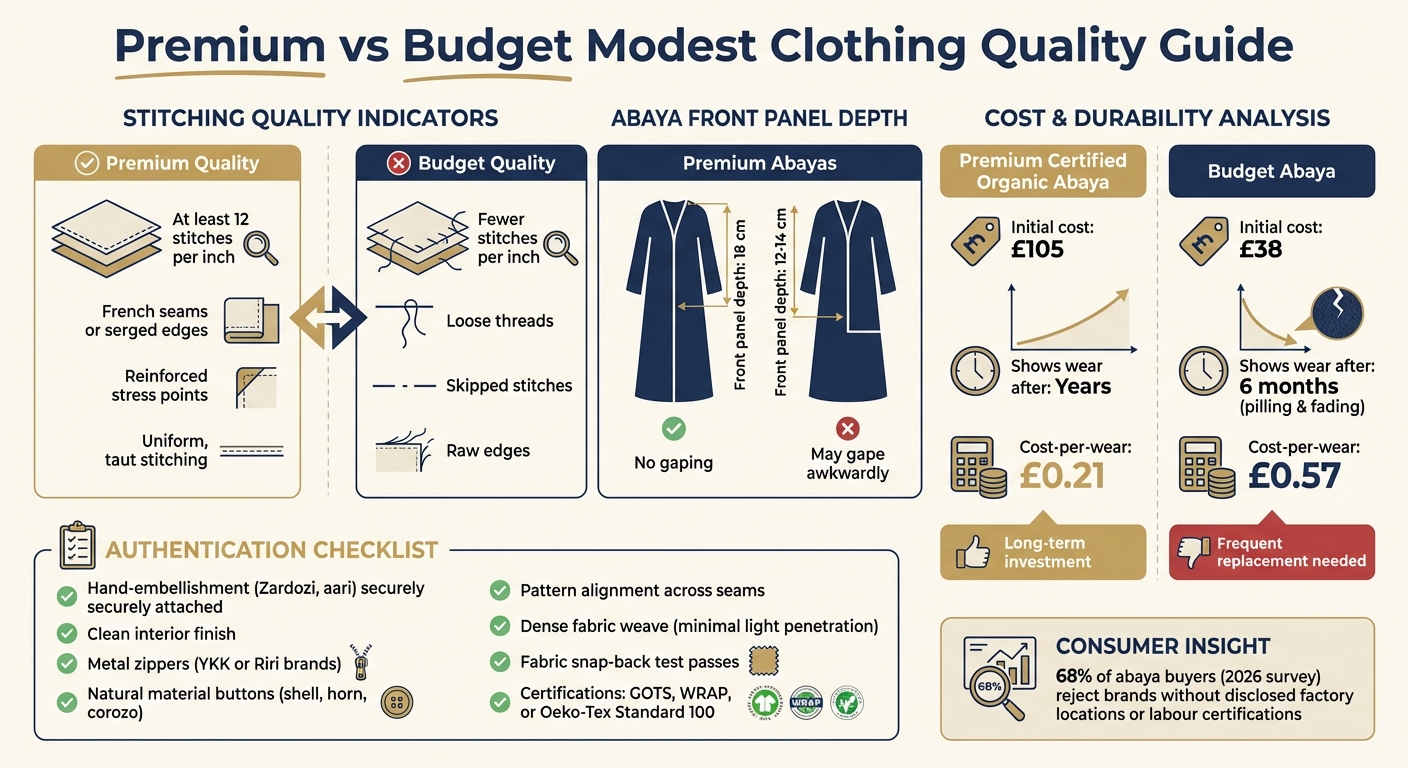
Premium vs Budget Modest Clothing: Quality Indicators and Cost Comparison
Understanding the nuances of quality craftsmanship can turn shopping for modest clothing into a more informed and rewarding experience. By focusing on specific, tangible details, you can distinguish garments that are built to last from those that cut corners. Premium modest apparel stands out through its construction, materials, and attention to detail.
Attention to Detail and Stitching Quality
Start with the stitching. High-quality garments typically feature at least 12 stitches per inch - a sign of precision and durability. Run your fingers along the seams; the stitching should feel uniform, taut, and perfectly straight[26,27].
Turn the garment inside out. Look for French seams, serged edges, or reinforced stress points at the shoulders, armholes, and side seams. Be wary of loose threads, skipped stitches, or raw edges - these are red flags that suggest rushed production[25,27].
Fabric quality is another key indicator. Hold the material up to natural light; densely woven, high-quality fabrics will let through minimal light[26,27]. If you gently pull the fabric horizontally, it should snap back into shape without showing any signs of distortion. For patterned designs, such as stripes or intricate Islamic motifs, check that the patterns align perfectly across seams. Misaligned patterns often indicate a lack of care during production[1,26,27].
Hardware also speaks volumes about quality. Look for smooth-gliding metal zippers - brands like YKK or Riri are excellent choices[26,27]. Buttons made from natural materials, such as shell, horn, or corozo, should be securely attached with reinforcement[26,27]. As Anyro, founder of 1ABEL, explains:
"Quality isn't about logos or price - it's about construction, materials, and craftsmanship".
These principles apply to both contemporary modest wear and traditional pieces like djellabas and mukhawaras.
Spotting Authenticity in Djellabas and Mukhawaras
Authenticity is essential when assessing traditional garments such as djellabas and mukhawaras. These pieces often reflect rich artisanal traditions, and certain details can reveal whether they honour this heritage or compromise on quality. For example, hand-embellishment techniques like Zardozi (metal threadwork) and aari embroidery should be securely attached with a clean finish on the interior. Loose threads or glued-on crystals are signs of inferior craftsmanship[29,1].
When it comes to abayas, functional modesty is a hallmark of quality. Premium abayas typically feature a front panel depth of at least 18 centimetres, compared to budget options (12–14 centimetres) that may gape awkwardly. The lining should also reflect the same level of care, with perfectly aligned seams and no puckering.
Transparency from vendors is another strong indicator of quality. Ask about fabric sources and embroidery techniques. Reputable retailers are often open about their partnerships with artisan groups or guilds, such as the Al-Najd Embroidery Guild in Riyadh - a respected name in preserving traditional craftsmanship. Certifications like GOTS, WRAP, or Oeko-Tex Standard 100 also provide reassurance about ethical and sustainable practices.
A 2026 survey revealed that 68% of abaya buyers rejected brands that didn’t disclose factory locations or labour certifications, highlighting the growing demand for transparency. While a premium, certified organic abaya might cost around £105, its durability often makes it a better long-term investment. Budget versions, priced at approximately £38, tend to show wear - such as pilling and fading - within six months. Over time, the cost-per-wear of a premium garment can drop to about £0.21, compared to £0.57 for cheaper alternatives.
Conclusion
Craftsmanship turns simple fabric into garments that honour heritage and offer lasting quality. The distinction between clothing that lasts a single season and pieces cherished for generations lies in the details: precise stitching, hand-sewn accents, and premium natural fibres that drape elegantly. Opting for well-made abayas, thobes, or djellabas is more than a fashion choice - it's an investment in tradition, durability, and values. This dedication to quality also opens the door to more thoughtful and responsible fashion choices.
But craftsmanship is about more than technique; it also promotes fair and ethical practices. With over 1 in 25 people globally working in the garment industry, fast fashion often neglects workers' rights. Supporting garments made under fair conditions helps uphold the dignity of artisans. As Iman Masmoudi, President of TŪNIQ, puts it:
"Luxury, beauty, and most importantly baraka-filled clothes should be as accessible as possible while respecting the materials and labor that created them".
Understanding these principles allows you to recognise the difference between artisan craftsmanship and mass production. This fusion of heritage and modern precision defines our premium collections. Choosing well-crafted modest clothing means embracing garments that align with your values, respect your spending, and celebrate the artisans who create them. These are pieces designed not for fleeting trends but for lasting purpose and timeless style.
FAQs
How can I tell if an abaya or thobe is truly well-made?
To spot a well-crafted abaya or thobe, pay attention to a few important details. Start with the fabric quality - it should feel smooth to the touch, have a good weight, and drape gracefully without being too sheer. Next, examine the seams and stitching - they should lie flat, be evenly sewn, and show no loose threads. Finally, consider the overall drape - premium fabrics should flow effortlessly while maintaining their structure. If there’s embroidery or embellishment, look for precise work that shows care and skill in its craftsmanship.
Which fabrics are best for comfort and durability in modest wear?
Fabrics like Nidha, crepe, and modal are perfect for modest clothing, combining comfort with durability. Nidha is known for its soft texture, breathability, and luxurious finish, making it a favourite for elegant wear. Crepe brings a textured look, resilience, and versatility, suitable for various designs. Meanwhile, modal excels with its breathability, moisture-wicking properties, and lasting quality. These features make them excellent options for garments such as Abayas and Thobes.
Are handcrafted details worth the higher price?
Handcrafted details justify the higher price because they reflect exceptional craftsmanship, careful attention to detail, and the use of high-quality materials. These elements not only elevate the garment's sophistication and longevity but also highlight its deeper significance, making it a meaningful and worthwhile purchase.