


How to Care for Your Thobe to Keep It Looking New
Your thobe, whether made from cotton or polyester, requires proper care to maintain its appearance and longevity. Here's a quick guide to keeping it in excellent condition:
- Washing: Always use cool water (below 30°C) and a mild detergent. Turn the garment inside out and avoid bleach or fabric softeners.
- Drying: Air dry on a wide or padded hanger in a shaded area to prevent shrinkage, yellowing, or fibre damage.
- Ironing/Steaming: Iron inside out on low to medium heat or use a steamer for delicate fabrics and embroidery.
- Stain Removal: Address stains immediately with appropriate methods for sweat, oil, food, or ink stains. Avoid harsh scrubbing.
- Storage: Use breathable garment bags and padded hangers. Store in a cool, dry space away from sunlight and humidity.
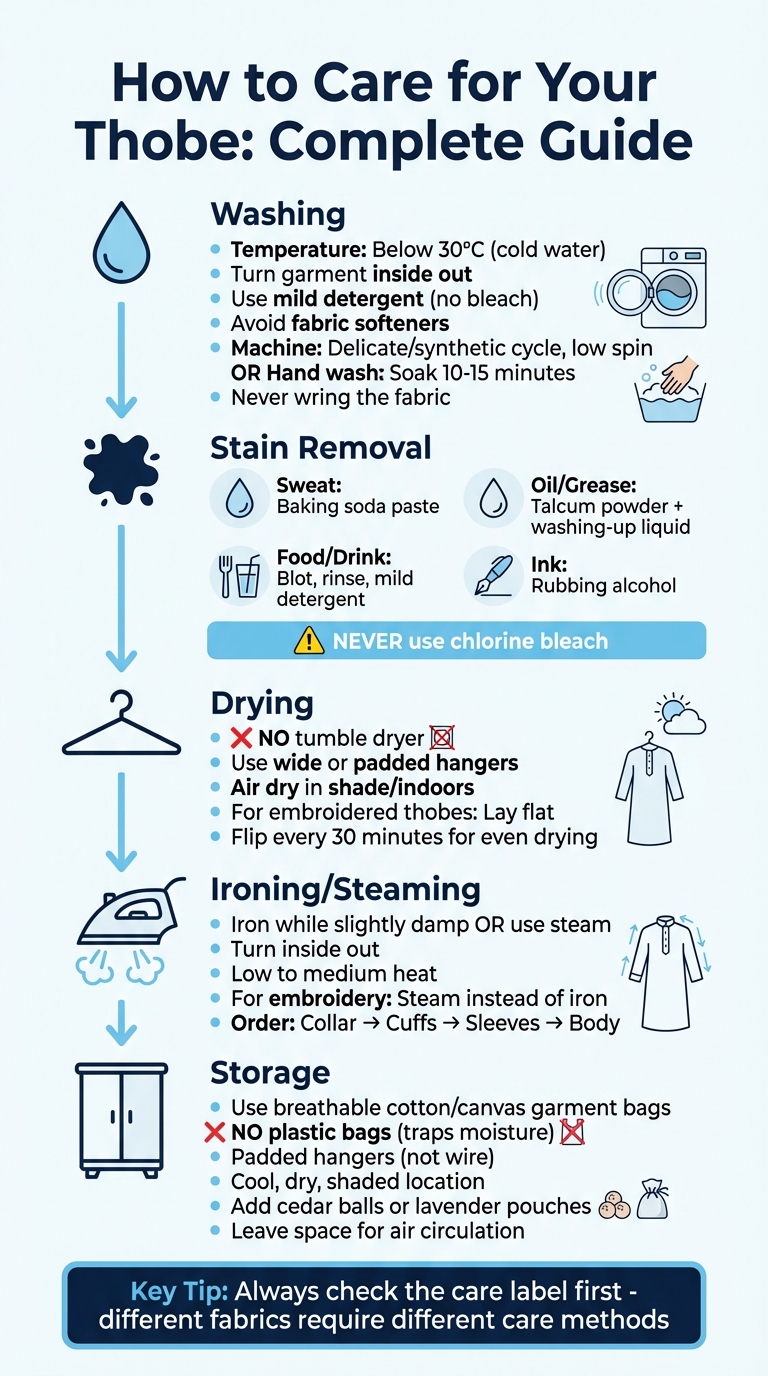
Complete Thobe Care Guide: Washing, Drying, Ironing and Storage Steps
Reading the Care Label
The care label is your go-to guide for keeping your thobe in top-notch condition. This tiny tag is packed with essential instructions on how to wash, dry, and iron your garment without risking shrinkage, colour fading, or fabric damage. Ignoring it could spell disaster for even the finest thobe. By sticking to the label's advice, you can tailor your care routine to suit the specific fabric of your thobe.
Different fabrics demand different methods of care. For example, polyester thobes can handle synthetic wash cycles but don’t react well to fabric softeners, which can trap odours in the fibres. Linen, on the other hand, often comes with a "dry clean only" warning, and disregarding this could result in permanent damage. The care label takes the guesswork out of the equation, letting you know whether to hand wash, use a gentle machine cycle, or rely on professional cleaning services.
Pay attention to symbols that indicate temperature limits, bleach restrictions, and drying methods. A crossed-out triangle, for instance, warns against using chlorine bleach, which can weaken the fabric and cause white thobes to yellow. If your thobe features embroidery or tassels - commonly seen in Emirati designs - the label might recommend steaming instead of ironing to safeguard the intricate details.
Understanding Fabric Care Symbols
Fabric care symbols act as a universal shorthand, using shapes and dots to explain washing requirements. For instance, a tub marked "30°C" or a single dot advises washing in cold or lukewarm water, which is crucial for preventing shrinkage in fabrics like cotton and linen. Two lines beneath the tub indicate a delicate or gentle cycle, reducing wear and tear on lightweight materials.
The iron symbol with dots specifies heat settings; always use low to medium heat and iron the garment inside out to protect embellishments. A circle with the letter "P" or "F" signals that the item needs professional dry cleaning, often necessary for thobes with intricate embroidery. If your thobe includes detachable tassels, remove them before washing to avoid tangling or damage.
sbb-itb-81d10cb
Washing Your Thobe Correctly
When washing your thobe, it's essential to keep the water temperature cool - no higher than 30°C. Hot water can cause delicate fabrics like cotton and linen to shrink, and it may also dull their colours over time.
To start, turn your thobe inside out. This step helps protect the outer fabric, embroidery, and buttons from unnecessary friction during washing. If your thobe has detachable tassels, remove them to avoid tangling or damage. For white thobes, always wash them separately from coloured garments to prevent any risk of colour transfer.
Select a mild detergent that’s free from bleach. Harsh chemicals, such as chlorine bleach, can weaken the fabric and lead to discolouration over time. As Daniel Corlett from AbayaButh points out:
Cotton is a delicate material that is prone to shrinking when washed in hot water or tumble-dried.
It's also best to skip fabric softeners. These products can coat the fibres of the fabric, making them weaker and even trapping odours, particularly in polyester blends.
When using a washing machine, opt for a delicate or synthetic (sometimes labelled as 'shirt') cycle with a low spin speed. Placing your thobe in a mesh laundry bag offers extra protection. Alternatively, handwashing is an excellent option. Soak the garment in cool water with a mild detergent for 10–15 minutes, then gently work on stains using your fingers or a soft brush. Jubbas advises:
Handwashing with a light detergent and warm water is usually the best way to clean these types of thobe [white thobes].
After washing, avoid wringing the fabric, as this can distort its shape. Instead, gently press out excess water. Air drying is the safest way to dry your thobe, as tumble dryers, even on the gentlest settings, can cause shrinkage or damage. Up next, discover the best techniques for drying and ironing your thobe.
Removing Stains from Your Thobe
Keeping your thobe spotless requires quick action when it comes to stains. Addressing marks right away helps maintain its pristine look and stops stains from becoming a permanent problem. As New Arabia notes:
Make sure to treat any stains as soon as possible, try not to let them sit and become ingrained in the fabric.
For tough stains, soaking the affected area overnight in cool water with a mild detergent can often work wonders. Be gentle, especially around embroidery or delicate stitching - scrubbing too hard can cause damage.
Pre-Treatment Tips for Common Stains
Different stains need different approaches, so here’s how to handle a few common culprits:
- Sweat stains: For discolouration around collars or underarms, mix a paste of baking soda and water. Gently rub it into the stain before washing.
- Oil or grease stains: Start by blotting any excess oil. Then, sprinkle talcum powder or cornflour over the area to absorb the grease. Brush it off and apply a small amount of washing-up liquid, working it into the stain gently.
- Food and drink stains: Act fast. Blot any liquid with a paper towel, rinse the back of the fabric with cold water, and apply a bit of mild liquid detergent. Massage it in softly, let it sit for a few minutes, and then launder as usual.
- Ink stains: Dab the area carefully with rubbing alcohol using a clean cloth. For lingering odours - especially with polyester blends - a splash of white vinegar applied to the underarm area before washing can help.
A key rule to remember: never use chlorine bleach. As Al-Aniq warns:
Avoid chlorine bleach - it weakens fabric and can turn your thobe yellow.
For stains near embroidery, work carefully from the inside of the fabric. Use soft tools like your fingertips or a soft-bristled brush to avoid snagging any threads. This gentle approach will keep your thobe looking its best for longer.
Drying and Ironing Your Thobe
Taking the time to dry and press your thobe correctly is key to maintaining its shape, structure, and overall lifespan. Proper drying helps prevent shrinkage, while careful ironing ensures a polished look without harming delicate details.
How to Air Dry Your Thobe
Avoid tumble dryers at all costs. The intense heat can shrink the fabric and create stubborn creases that are nearly impossible to fix.
After washing, gently press out excess water - don’t wring it. Hang your thobe immediately on a wide or padded hanger to preserve its natural drape. Steer clear of wire hangers; they’re too flimsy, can snag the fabric, and might even leave rust stains on lighter-coloured thobes.
Always dry your thobe in the shade or indoors to prevent yellowing and fibre damage from direct sunlight. For thobes with intricate embroidery, lay them flat on a clean, dry surface instead. This prevents the weight of water from stretching the fabric, especially around the shoulders. Flip the garment every 30 minutes to ensure even drying.
Once your thobe is completely dry, it’s time to focus on achieving that crisp, refined finish with careful pressing.
Ironing and Steaming Methods
Proper ironing or steaming is essential to refine your thobe’s appearance after drying. For best results, iron the thobe while it’s still slightly damp - this makes it easier to smooth out wrinkles. If it’s already dry, a steam iron is your best friend, as it reintroduces moisture to the fibres.
Turn the garment inside out and use a low to medium heat setting to protect the fabric and any embroidery. For thobes with detailed stitching, steaming is a safer alternative to traditional ironing. As Al-Aniq advises:
For thobes like our White Thobe with Silver Embroidery, opt for steaming instead of ironing to preserve delicate stitching.
When ironing, work systematically. Start with the collar and cuffs, move on to the sleeves and shoulders, and finish with the main body. Use the tip of the iron to carefully navigate around buttons and decorative elements. For added protection, place a thin white cotton cloth between the iron and the fabric. If you want an extra polished look, a light spray of fabric starch can help - but be sure your iron’s soleplate is spotless to avoid any residue marks.
Storing Your Thobe Properly
Once your thobe is washed, dried, and pressed, storing it the right way is key to keeping it fresh and in good condition, ensuring you always have the best men's thobes for comfort and style ready to wear. Proper storage helps prevent yellowing, musty smells, and even mould.
Using Breathable Garment Bags
Avoid plastic bags when storing your thobe. Plastic traps moisture, which can lead to mould and yellowing over time. Instead, go for a breathable garment bag made of cotton or canvas. These materials allow air to circulate, protect the fabric from dust, and ensure any delicate embroidery stays safe from snags.
Before hanging your thobe, make sure to fasten all buttons and zips to help it retain its shape. Use broad, padded hangers instead of wire ones. Wire hangers can rust, stain lighter fabrics, and leave shoulder marks that are tough to remove. Pairing the right hanger with a suitable storage bag ensures your thobe stays in top shape.
Choosing the Right Storage Location
Where you store your thobe is just as important as how you store it. Keep it in a cool, dry, and shaded spot to avoid colour fading and fibre damage. White thobes are particularly prone to yellowing if exposed to sunlight.
Avoid cramming your wardrobe - it’s better to leave some space for air to circulate, which also helps prevent creases. To tackle humidity and keep your thobe smelling fresh, you can add cedar balls, lavender pouches, or natural dehumidifiers to your storage area. These not only maintain a pleasant scent but also ward off mould and moths without using harsh chemicals.
Conclusion
Taking care of your thobe doesn’t have to be complicated. With a few straightforward steps, you can maintain its quality and appearance. Washing with cool water, a gentle detergent, and using delicate techniques helps protect the fabric and keeps the colours looking fresh.
Once clean, how you dry, iron, and store your thobe makes all the difference. Air drying in the shade prevents issues like shrinkage and yellowing, while ironing it when slightly damp smooths out creases without damaging the fibres. For storage, breathable garment bags and padded hangers shield your thobe from dust, moisture, and pesky moths.
"By following the tips outlined in this guide, you can effectively clean and care for your thobes and keep your high quality garments looking fresh and extending their lifespan." - newarabia
Thobes made from premium materials, such as Japanese cotton, deserve this level of attention. A simple yet thoughtful care routine not only extends the garment’s life but also preserves its timeless style and elegance.
FAQs
What’s the best way to remove tough stains from a thobe without causing damage?
To remove stubborn stains from your thobe without harming the fabric, try these straightforward steps:
- Check the care label first to determine the appropriate cleaning method - whether hand-washing, machine-washing, or dry-cleaning. Avoid using harsh chemicals unless the label specifically allows them.
-
Treat the stain according to its type:
- For oil or grease stains, gently apply a small amount of mild liquid dish soap or a stain remover. Let it sit for 10–15 minutes.
- For sweat stains or yellowing, mix baking soda with water to form a paste. Apply it to the affected area and leave it for 30 minutes.
- Wash the treated area by hand in lukewarm water with a gentle, colour-safe detergent. Rub the fabric lightly with your fingertips or a soft cloth, but avoid scrubbing too hard.
- Rinse thoroughly with cool water and air-dry the thobe flat. Keep it away from direct sunlight or heat sources, and skip the tumble dryer to protect the fabric.
These careful methods will help you tackle stains while maintaining your thobe’s fresh and polished appearance.
How should I store my thobe to keep it fresh and prevent discolouration?
To keep your thobe looking its best and free from yellowing or unpleasant odours, proper storage is key. Always ensure it's clean and completely dry before putting it away. Start by giving the fabric a gentle shake and laying it flat for a few minutes to let any lingering moisture evaporate. You can either fold it neatly on a clean, flat surface or hang it on a padded, breathable hanger - skip wire hangers, as they can leave unsightly creases.
For added protection, place your thobe in a cotton or muslin garment bag. These materials allow air to circulate and help prevent humidity, which is often the culprit behind odours and discolouration. Avoid using sealed plastic covers, as they trap moisture. Store your thobe in a cool, dry wardrobe, away from direct sunlight, as exposure to sunlight can fade colours and contribute to yellowing. To keep it smelling fresh, consider adding a natural deodoriser like a lavender sachet or a small charcoal bag.
For thobes with delicate fabrics or intricate embroidery, place acid-free tissue paper between the folds to avoid damage. By following these simple steps, your thobe will remain fresh, well-preserved, and ready to wear for years to come.
Why should I follow the care label instructions on my thobe?
To keep your thobe looking its best, it's crucial to follow the instructions on the care label. These directions are specifically designed for the fabric and craftsmanship of your garment, helping to avoid problems like shrinkage, colour fading, or damage to the material.
By sticking to the suggested methods for washing, drying, and ironing, you can preserve your thobe's immaculate appearance and make sure it lasts longer, staying as elegant as the day you got it.