


Traditional vs Modern Thobes What’s the Difference
The thobe, a long robe worn by men across the Middle East and beyond, has evolved into two main styles: traditional and modern. Each serves different needs, blending modesty with practicality. Here’s a quick breakdown:
- Traditional thobes: Loose-fitting, straight-cut designs made from lightweight cotton or linen, ideal for hot climates. They feature simple collars and minimal decoration, with white being the most common colour. These are typically worn for religious or formal occasions. Prices range from £32–£48 for basic styles, with premium versions costing up to £109.
- Modern thobes: Slimmer cuts with tailored fits, using durable fabric blends like polyester-cotton for wrinkle resistance and warmth - perfect for colder climates like the UK. They come in a variety of colours, including darker tones for winter, and often include features like shirt collars, zippers, and embroidery. Everyday styles cost £30–£42, while premium options go up to £85.
Choosing the right thobe depends on your lifestyle, climate, and occasion. Traditional thobes are timeless and simple, while modern ones offer style and practicality for daily use. Both reflect a rich heritage with a nod to modern preferences.
What Are Traditional Thobes?
Traditional thobes carry a rich history and cultural significance, representing centuries of tradition. Historical accounts like those from Ibn Khaldun, who described the thobe as a "cut" garment, and records of Imam Abdullah Bin Saud Al Saud in 1823, highlight the long-standing design of this attire.
These garments closely resemble the qamīṣ, a long, stitched cotton shirt with sleeves, which was favoured by the Prophet Muhammad. This connection imbues the thobe with deep religious and moral symbolism. Its design, rooted in practicality and modesty, aligns with Islamic principles, offering full-body coverage while protecting against the harsh desert climate.
Classic Design and Shape
The traditional thobe is characterised by its loose, ankle-length cut and long sleeves, prioritising comfort and modesty. Unlike fitted Western styles, its straight silhouette allows air to circulate freely, a vital feature for hot climates. Typically, the garment extends from shoulder to ankle, with lengths ranging from 132 to 157 centimetres (52 to 62 inches).
Regional styles add unique touches while preserving the essence of the design. Saudi Arabian thobes are known for their tailored fit, sharp collars fastened with two buttons, and buttoned cuffs. In contrast, Emirati kanduras are looser and collarless, distinguished by a decorative tassel (tarboosh) at the neckline. Omani thobes feature rounded collars with intricate chest embroidery and a shorter tassel known as a furakha. Qatari thobes stand out with their high collars and crisp cuffs.
The craftsmanship behind these garments highlights durability and cultural identity. Hand-sewn details, intricate embroidery, and unique stitching not only enhance their aesthetic appeal but also reflect the heritage of different Gulf Cooperation Council nations.
While the thobe’s design has remained consistent, fabric choices play a key role in adapting to various climates and cultural preferences.
Fabrics and Colours Used
Traditional thobes are crafted from lightweight, natural fabrics like cotton and linen for summer, while thicker wool or blended materials are used in winter. White is the most popular colour, reflecting heat and light, making it ideal for desert climates. Cream and pale shades are also common in traditional designs.
For versatility across climates, a fabric blend of 80% polyester and 20% cotton offers a balance of breathability and wrinkle resistance. High-quality cotton, such as Egyptian or Pima varieties, is especially valued for its ability to keep wearers cool in warmer weather.
Prices for traditional thobes vary. Standard versions typically cost between £32 and £48, while premium options with detailed embroidery for special occasions range from £93 to £109. Children's thobes are generally priced between £22 and £32.
Regional Details and When They're Worn
Regional embroidery and craftsmanship make each style distinct. Emirati kanduras feature intricate "eight-stitch" embroidery on the chest and sleeves, whereas Omani thobes have more subtle, colourful embroidery compared to other Gulf styles. Moroccan djellabas are particularly striking with their pointed hoods, bold embroidery, and heavier fabrics, making them suitable for cooler climates like North Africa or the UK.
Traditional thobes are a staple for religious and cultural events. They are commonly worn for Friday prayers (Jumu'ah), Eid celebrations, weddings, and formal gatherings. While older generations continue to wear them daily, younger individuals increasingly reserve them for special occasions, often opting for Western clothing for everyday use. Plain white thobes are ideal for daily wear and Friday prayers, while more elaborate designs with embroidery or darker colours are chosen for festive events like Eid or weddings.
These distinctive regional features set the stage for exploring how modern thobes have evolved in both style and function.
"The thobe is more than just a garment - it's a cultural legacy, a fashion statement, and a symbol of timeless elegance." - Al Manaar
What Are Modern Thobes?
Modern thobes represent a seamless blend of cultural heritage and contemporary practicality, especially in UK cities where wearers look for garments that fit effortlessly into professional, social, and casual settings. This evolution reflects a wider shift in Islamic menswear - one that prioritises functionality, adaptability, and individuality while staying true to tradition.
Designer Hatem Al-akeel, who launched his brand Toby in 2006, summed up this transformation perfectly: "My aim is to bring a Savile Row approach to thobe design".
This vision has inspired a new wave of thobe designs, merging the precision of British tailoring with the timeless charm of Middle Eastern fashion. While traditional thobes celebrate heritage through simplicity, modern versions are crafted to meet the diverse needs of today’s wearers. This has led to the introduction of updated silhouettes, innovative materials, and versatile styling options.
Updated Shapes and Cuts
One of the most noticeable changes in modern thobes is their updated silhouette. Unlike the loose, boxy shapes of traditional designs, contemporary thobes feature slimmer, more structured cuts that follow the body’s natural contours. This creates a polished, streamlined look that works well in professional and urban environments.
Western-inspired details, such as stiff shirt collars, metallic or mother-of-pearl buttons, and subtle belts, add a touch of sophistication. Meanwhile, sporty elements like hoods, zippers, and ribbed cuffs give modern thobes a casual, streetwear vibe while maintaining modesty. The growing popularity of athletic fits reflects a shift towards more tailored, image-conscious designs.
In addition to new cuts, modern thobes now incorporate advanced fabrics that prioritise durability and comfort.
New Fabrics and Colour Options
Fabric innovation has revolutionised the practicality of modern thobes. While traditional thobes are typically made from cotton, contemporary versions often use high-performance synthetic blends - commonly 80% polyester and 20% cotton - for added wrinkle resistance, durability, and easy care. Materials like Japanese polyester, viscose, and rayon are also popular for their ability to maintain shape and resist creasing.
To suit different seasons, heavier wool blends and thick cotton fabrics are ideal for colder months, while breathable linen and lightweight cotton are perfect for summer. The colour palette has also expanded far beyond the classic whites and creams. Earthy tones like beige and sandy hues, rich colours such as navy, emerald green, and dark cherry, and even soft pastels like sky blue and pistachio are now available. Darker shades, including black, grey, and navy, have become especially popular in UK cities during winter, offering practicality and a professional edge while concealing dirt.
Modern thobes are priced to suit various budgets, with everyday styles ranging between £30 and £42, while premium designs featuring intricate embroidery or specialty fabrics can cost up to £80 to £85.
Styling for Today's Life
Modern thobes are designed to fit seamlessly into every aspect of daily life. For casual outings, pairing lighter-coloured thobes made from breathable fabrics with trainers creates a relaxed, streetwear-inspired look. In professional or formal settings, darker tones - such as navy, black, or grey - combined with refined embroidery and structured cuts create an appearance that is both polished and respectful of cultural identity.
Layering is key to adapting thobes to the UK’s unpredictable weather. Lightweight bomber jackets, tailored overcoats, or minimalist waistcoats can be worn over a modern thobe, making it easy to transition between outdoor and indoor environments. This approach not only adds practicality but also enhances the thobe’s elegance. Accessories like scarves, whether a Yashmagh or Keffiyeh, provide warmth and add a touch of style.
Traditional vs Modern Thobes: Direct Comparison
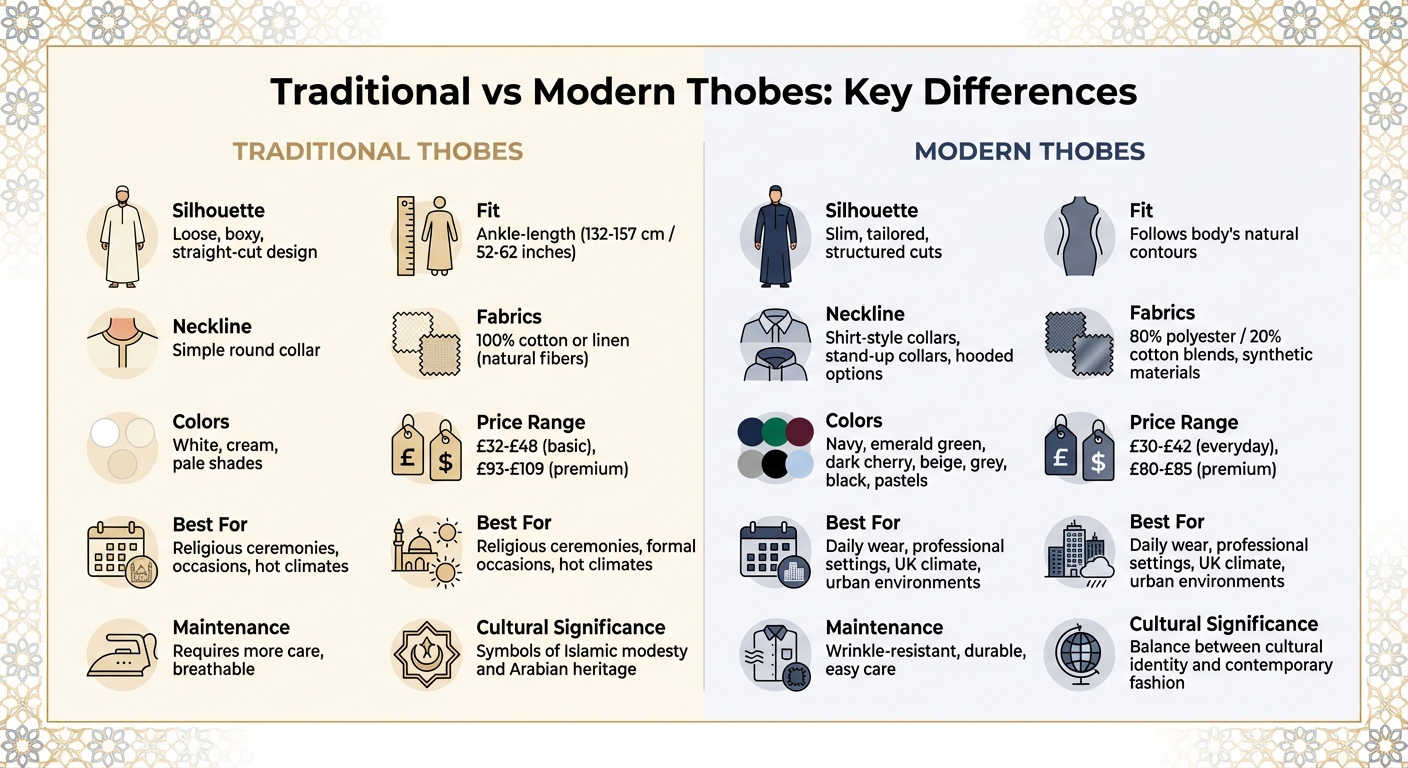
Traditional vs Modern Thobes: Key Differences Comparison Chart
Deciding between traditional and modern thobes often comes down to how well they fit into your daily life. Traditional thobes are known for their loose, boxy shape, which allows for excellent airflow. In contrast, modern thobes feature a more tailored design, offering a slim fit that follows the body’s natural lines. When it comes to necklines, the traditional style sticks to simple round designs, while modern thobes experiment with shirt-style collars, stand-up collars, or even hooded options.
Fabric choices also set them apart. Traditional thobes are typically made from natural fibres like 100% cotton or linen, which are breathable but require more care. Modern thobes, on the other hand, often use polyester blends - usually an 80% polyester and 20% cotton mix - offering durability, wrinkle resistance, and easier upkeep. These modern fabrics are particularly practical for the UK’s unpredictable weather, providing year-round wearability and better insulation during colder months.
While traditional thobes stand as symbols of Islamic modesty, humility, and Arabian heritage, modern versions strike a balance between cultural identity and contemporary fashion. Dr Laila AL Bassam, the first Saudi professor to study traditional Arab costumes, highlights this enduring connection:
"Looking at what we wear traditionally, for both men and women, the silhouette has hardly changed for thousands of years - it is what Dr Laila AL Bassam calls 'basic human design'".
Modern thobes have gained popularity among younger generations, who see them as a way to honour their cultural roots while embracing modern style. For wearers in the UK, the choice often comes down to practical considerations like comfort, care, and cost, as well as the ability to adapt to varying weather conditions. These evolving designs and materials naturally lead into the discussion of price and durability.
Price and Durability
Cost and longevity are key factors when comparing traditional and modern thobes. Brands like Al-Badr Clothing offer a wide range, with basic thobes priced between £20 and £30, while premium options featuring intricate embroidery and high-quality Japanese polyester range from £119.95 to £139.95. Modern synthetic blends often provide better long-term value, as they resist pilling, maintain their shape, and require less maintenance than traditional cotton fabrics. For UK wearers, who frequently deal with variable weather and regular washing, the polyester-cotton blend thobes present a practical and cost-effective option. However, traditional pure cotton thobes remain a strong choice for those prioritising breathability, particularly in warmer conditions.
sbb-itb-81d10cb
How to Choose the Right Thobe for You
What to Think About
When picking a thobe, think about the UK's climate, the occasion, and your personal style. For colder months, go for heavier fabrics like wool blends or thick cotton in darker shades. In the summer, lighter materials like cotton or linen in pale colours will help you stay cool. For everyday wear or mosque visits, a loose-fitting, neutral-coloured cotton or blended fabric works well. If you're attending a formal event, consider a tailored thobe made from premium fabric, possibly with decorative details. Always ensure the fabric is opaque to maintain modesty.
Your choice between a traditional or modern style should reflect your lifestyle and preferences. For formal occasions, a Qatari-style thobe with a stiff collar and wide cuffs offers a polished look. Keep in mind that thobe sizes generally indicate the length from shoulder to ankle (e.g., a size 56 measures about 56 inches).
Once you've figured out your needs, aim to build a collection that covers casual, formal, and seasonal options.
Building a Thobe Collection
A versatile wardrobe includes thobes suited to different occasions. Start with a casual white or cream thobe for everyday use, then add a formal option with embroidery or refined tailoring for special events. You might also include regional variations like a relaxed Emirati Kandura or a sleek Saudi design. For colder days, pair your thobe with a shemagh or ghutra for added warmth.
If you're feeling adventurous, try modern colours like Sage, Glacier Green, or Deep Maroon for evening gatherings, while saving classic white for daytime occasions.
Care and Maintenance Tips
Taking care of your thobe properly will keep it looking its best for longer. Wash it inside out in cold water using a mild detergent to prevent fading. Detach any tassels before washing, and let the garment air dry away from direct sunlight. Avoid using a tumble dryer.
For storage, padded hangers help maintain the shoulder shape and prevent wrinkles. Store formal thobes in garment bags when not in use. When it comes to ironing, a steam iron on medium heat works well. These tips apply to both traditional cotton thobes and modern polyester-cotton blends. Synthetic blends, in particular, are easier to maintain, making them a practical choice for the unpredictable UK weather.
Conclusion
Deciding between a traditional and a modern thobe comes down to finding a balance between cultural heritage and your day-to-day lifestyle. Traditional thobes celebrate centuries of history with their loose, boxy cuts, breathable cotton fabrics, and distinctive regional touches, like the Emirati tarboosh or the high-collared Saudi designs. They’re the ideal choice for religious ceremonies and formal gatherings, where modesty and symbolism take centre stage. On the other hand, modern thobes bring a tailored fit, low-maintenance synthetic blends, and a wider range of colours, making them perfect for everyday urban settings and contemporary style preferences. For instance, you might wear a classic white cotton thobe to Friday prayers but switch to a slim-fit, earthy-toned option for casual outings or work. It’s all about matching the garment to the occasion and your comfort.
When building your wardrobe, think about the UK’s climate, your daily routine, and the types of events you attend. A versatile collection could include a traditional white thobe for formal occasions, a modern polyester-cotton blend for practicality, and perhaps a regional design that reflects your heritage. Proper tailoring is key - ensure the shoulders fit well and the hem lands just above the ankle for a polished look. This thoughtful approach not only enhances your personal style but also deepens your connection to your cultural roots.
At the end of the day, the thobe you choose should make you feel comfortable, confident, and proud of your identity. Both traditional and modern styles offer unique ways to express who you are.
FAQs
What should I consider when choosing between a traditional and a modern thobe?
Choosing between a traditional thobe and a modern one comes down to your preferences, needs, and the occasion. Traditional thobes are usually loose-fitting, crafted from breathable cotton, and designed with simplicity in mind. They’re ideal for formal religious gatherings like Friday prayers or Eid celebrations and are especially suited for warm weather, offering both comfort and a sense of heritage.
Modern thobes, however, bring a contemporary twist. They often come with a tailored fit, a broader range of colours, and subtle patterns or textures. These are more versatile, perfect for casual outings or even styled with jackets for a more modern vibe. Think about the setting and your personal style when deciding. For instance, a traditional thobe works best for formal or religious events, while a modern option fits casual or fashion-forward occasions. Opt for cotton during the summer months or lightweight blends for the cooler UK seasons. The key is to pick a thobe that matches your lifestyle and lets your personality shine through.
What distinguishes traditional thobes from modern designs in terms of fabric and style?
Traditional thobes are crafted with a focus on practicality and comfort, making them perfect for warmer climates. They are typically made from breathable fabrics such as pure cotton or cotton-polyester blends. The design is straightforward, featuring a loose, ankle-length cut with long sleeves and a round neckline. Decorations are minimal, and the colour palette sticks to plain whites or soft, muted tones, reflecting both modesty and a deep connection to cultural traditions.
Modern thobes, while keeping the classic shape, bring in updated fabrics like lightweight polyester, linen blends, and textured weaves, offering both durability and a touch of style. The fit is often more tailored, with details such as Mandarin or stand-up collars, refined cuffs, and subtle patterns or decorative stitching. Colour choices now extend to earthy tones, pastels, and darker shades. Some designs even introduce functional elements like hoods or layered accents, blending timeless tradition with a contemporary twist.
Which type of thobe is best suited for the UK's weather?
Traditional thobes are typically crafted from lightweight fabrics like cotton or linen. These materials are ideal for hot, dry climates, as they allow air to circulate and help the wearer stay cool. However, they’re not quite suited for the cooler, wetter weather often experienced in the UK.
In contrast, modern thobes incorporate a wider range of fabrics, such as polyester blends and wool. These materials provide better insulation and help resist moisture, making them more suitable for chilly or damp conditions. Some updated designs even cater to colder seasons with features like hoods or styles that pair well with jackets and coats.
For the UK's unpredictable weather, opting for a modern thobe made from thicker fabrics or designed for layering is a much more practical and comfortable solution.