


The Difference Between Emirati and Qatari Thobes
Emirati and Qatari thobes may look similar at first glance, but they have distinct features that reflect their origins. Here's a quick breakdown:
- Emirati Thobes (Kandura): Collarless with a rounded neckline, featuring a long tassel (tarboosh). Made from lightweight, matte cotton for comfort in hot weather. Embroidery is subtle, and the design is loose and flowing.
- Qatari Thobes (Dishdasha): Stiff, shirt-like collar with wide, buttoned cuffs. Often crafted from shiny polyester for a sleek look. The cut is straight and structured, with minimal embellishment.
Both garments serve practical purposes while showcasing regional styles. Emirati thobes prioritise simplicity and ease, while Qatari thobes offer a sharper, more formal appearance.
Quick Comparison
| Feature | Emirati Thobe (Kandura) | Qatari Thobe (Dishdasha) |
|---|---|---|
| Collar | Collarless, rounded neckline | Stiff, shirt-like collar |
| Tassel | Long tassel (tarboosh) | None |
| Cuffs | Open sleeves | Wide, buttoned cuffs |
| Fabric | Lightweight, matte cotton | Shiny polyester or blends |
| Fit | Loose and flowing | Straight and structured |
| Embroidery | Subtle | Minimal or none |
Whether you prefer relaxed elegance or a polished, formal style, your choice reflects not just your personal taste but also the heritage behind these garments.
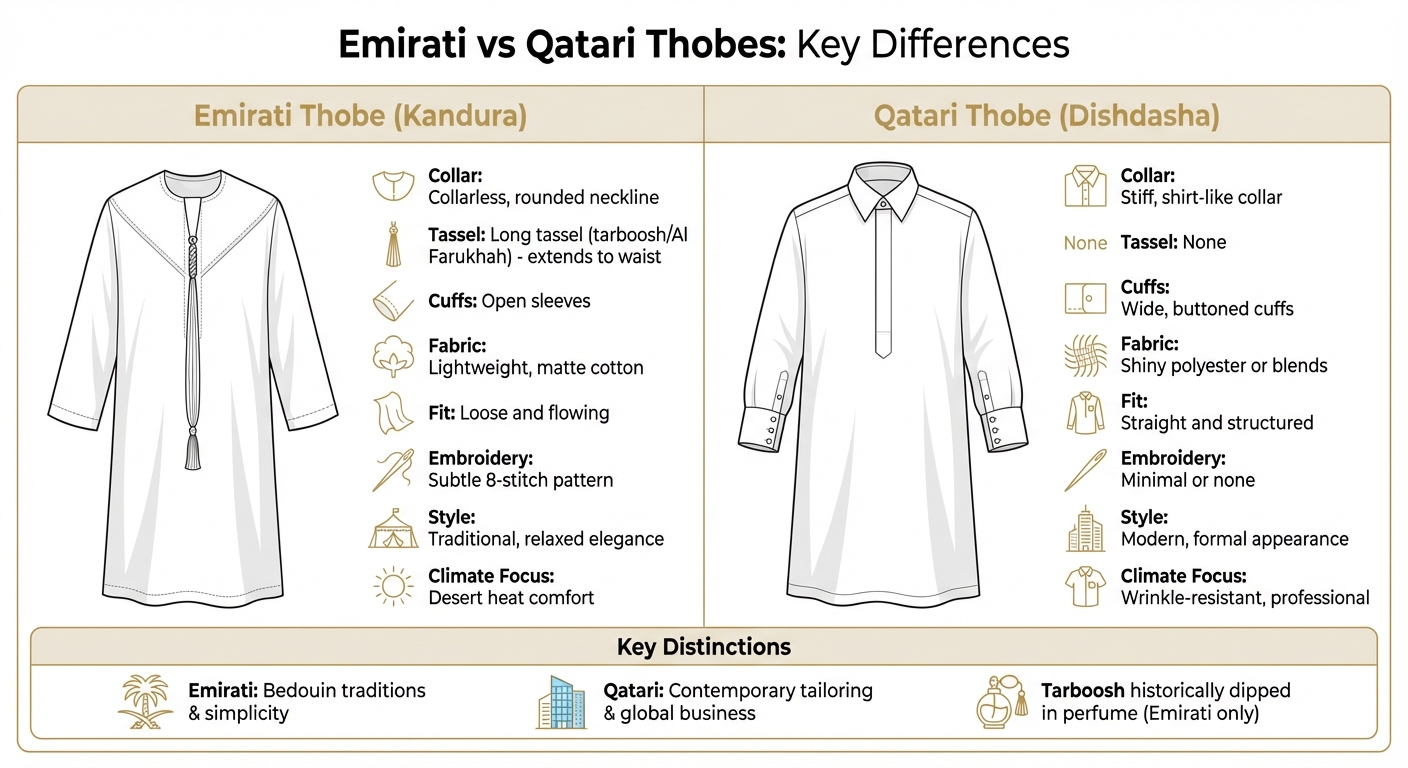
Emirati vs Qatari Thobe Comparison Guide
Emirati Thobe Design and Features
The Emirati thobe, known locally as the kandura, is celebrated for its practical design and timeless elegance. It’s crafted to suit the UAE's desert climate while reflecting a cultural taste for simplicity and refinement. Let’s take a closer look at the key elements that define this iconic garment.
Collar Style and Tassel Detail
One of the standout features of the Emirati kandura is its collarless design, which includes a smooth, rounded neckline. This design isn’t just for aesthetics - it enhances airflow, offering relief in the region’s intense heat. Adding to its unique charm is the Al Farukhah (or Tarboosh), a long, handmade tassel crafted from plaited strings that hangs from the neckline, often extending down to the waist. As noted by Penley Perspective:
"The Emirati style has a collarless robe with a much longer plaited tassel made of strings that hang down the middle, called Al Farukhah. The tassel can hang down to the waist, it's quite dramatic."
- Penley Perspective
Beyond the tassel, many kanduras feature an elegant 8-stitch embroidery pattern along the chest and sleeves. This subtle detailing adds a modern yet minimalist touch to the traditional attire.
Fabric Types and Embroidery Patterns
Traditionally, kanduras are made from premium cotton fabrics like Egyptian, Pima, or Japanese/Korean varieties. However, blends of polyester and cotton have become increasingly popular, with an 80% polyester, 20% cotton mix offering better heat regulation and wrinkle resistance. The embroidery on the kandura is intentionally understated, aligning with its clean and simple aesthetic. While white is the go-to choice during the scorching summer months, darker hues are often preferred in the cooler winter season.
Fit and Shape
The kandura is designed with a loose, flowing silhouette that prioritises comfort and unrestricted movement. Its streamlined structure typically avoids front pockets or visible buttons, maintaining a sleek and unencumbered appearance. This thoughtful design ensures the kandura is equally suitable for everyday wear and formal occasions, effortlessly blending practicality with sophistication.
Qatari Thobe Design and Features
The Qatari thobe, or dishdasha, offers a modern twist on traditional Gulf attire, blending a sharper and more structured aesthetic.
Collar and Cuff Construction
One of the standout elements of the Qatari thobe is its stiff, shirt-like collar, setting it apart from the collarless design of the Emirati kandura. This collar typically features either a single button or none at all. The wide, buttoned cuffs add to its sleek, formal appearance, giving the garment a polished, professional edge.
Material Selection
Qatari thobes are often made from shiny polyester or high-quality synthetic blends, chosen for their refined, formal look. These fabrics are not just about style - they're practical too, offering durability, wrinkle resistance, and easy maintenance compared to natural fibres. During the warmer months, cotton-polyester blends are popular for their breathability, while cooler weather calls for heavier materials like lightweight wool or denser synthetics. These choices ensure the thobe remains both functional and elegant, regardless of the season.
Cut and Design Details
The Qatari thobe features a straight-cut design, creating clean lines and a streamlined look that stands in contrast to the more flowing styles seen in other regions. Practical touches like concealed front buttons, a chest pocket, and side pockets make it suitable for everyday wear. Notably, the design avoids decorative tassels, letting the structured collar and cuffs take centre stage. Younger generations are increasingly drawn to tailored versions that retain the classic straight-cut style while incorporating modern fashion trends.
Side-by-Side Comparison
Emirati and Qatari thobes each carry distinct regional characteristics that reflect their unique styles and cultural influences. The Emirati kandura is designed with simplicity and comfort in mind, while the Qatari thobe adopts a sharper, more formal appearance, featuring a structured shirt collar and wide cuffs. These differences highlight the individuality of each garment, setting the tone for a deeper exploration of their regional nuances.
One standout feature of the Emirati kandura is the tarboosh - a decorative tassel that historically served a practical purpose, as it could be dipped in perfume to provide a pleasant scent throughout the day. In contrast, Qatari thobes forego this detail, instead focusing on their crisp tailoring and defining features like their stiff collars and prominent cuffs.
The fabric choices further illustrate these regional distinctions. Emirati kanduras are typically made from lightweight, matte cotton, ensuring breathability and comfort in the desert heat. On the other hand, Qatari thobes often use polyester, which gives them a sleek, glossy finish. Additionally, Emirati designs often include subtle embroidery, while Qatari thobes favour a clean, minimalist aesthetic with little to no embellishment.
Functional details also play a role in setting them apart. Emirati thobes feature simple, open sleeves that enhance ease of wear, whereas Qatari thobes are characterised by their wide, shirt-style cuffs, adding a touch of formality.
While both garments share a classic silhouette, their differences reflect the priorities of the cultures they represent. The Emirati kandura emphasises tradition and comfort with its loose, flowing design, whereas the Qatari thobe leans towards a modern, tailored look that conveys formality and precision. These distinctions not only highlight the uniqueness of each garment but also offer a glimpse into the cultural values and aesthetic sensibilities that shape Gulf fashion.
sbb-itb-81d10cb
Regional Influences and Practical Considerations
Emirati Thobes and Bedouin Traditions
The Emirati kandura is deeply rooted in the UAE's Bedouin heritage, where practicality and simplicity were key to surviving the harsh desert conditions. Fashion designer Feryal Al Bastaki explains, "In the past, simple clothing reflected a simple social life". This philosophy is evident in the kandura's minimalist design - collarless, loose-fitting, and free from unnecessary embellishments - crafted for comfort and ease of movement in extreme heat.
A notable feature of the Emirati kandura is the tarboosh tassel. While it now serves as a decorative nod to tradition, it remains a meaningful link to the garment's heritage. As Al Bastaki puts it, "The development of the country is reflected in our designs, but we are always connected with our past".
Qatari Thobes and Contemporary Tailoring
Qatari thobes, on the other hand, reflect a blend of modern tailoring and global fashion trends. With a structured, shirt-like collar, wide cuffs, and a sharp silhouette, these garments project a polished, professional look - perfectly aligning with Qatar's status as a global business hub. Typically made from shiny polyester, Qatari thobes are wrinkle-resistant, making them ideal for formal occasions such as weddings or Eid celebrations.
These differences in design can help you decide which style suits your needs best.
How to Choose and Style Each Type
For everyday comfort, an Emirati kandura in lightweight cotton is an excellent choice. Its breathable fabric and collarless neckline, often paired with a tarboosh tassel, make it perfect for staying cool and stylish. If you're after a more formal and structured look, a Qatari thobe with its stiff collar and wide cuffs offers a sleek, business-like appearance.
For those looking to invest, Al-Badr Clothing offers a range of thobes in breathable fabrics priced between £19.99 and £32.99. For formal occasions, consider layering with a bisht - a lightweight wool cloak that, with proper care, can last up to 30 years. To maintain your thobe, wash it in cold water on a normal cycle and use a medium iron setting to keep the fabric in pristine condition.
Conclusion
Emirati and Qatari thobes reflect the rich traditions of their respective regions. The Emirati thobe stands out with its simple, traditional charm, while the Qatari design leans towards a more structured and formal appearance.
These differences can guide your choice based on the style you want to achieve. If you’re drawn to a relaxed yet culturally meaningful look, the Emirati style offers understated elegance. On the other hand, if a refined and polished image is what you’re after, the Qatari thobe brings a sleek, executive vibe.
Both styles serve practical needs as well - whether it’s the lightweight, breathable Emirati kandura or the wrinkle-resistant Qatari thobe, each is crafted with purpose and function in mind.
Al-Badr Clothing proudly showcases these iconic designs, celebrating the heritage and traditions of the Gulf. Whichever you choose, you’ll be wearing a timeless piece of regional identity.
FAQs
How do the fabric choices differ between Emirati and Qatari thobes?
Emirati thobes are designed with the region's warm climate in mind, often made from lightweight, breathable materials such as cotton or plain polyester. Their style leans towards simplicity, with minimal or no embroidery, embodying a sense of understated elegance that prioritises comfort and practicality.
On the other hand, Qatari thobes tend to have a more formal and refined look. They are often crafted from shiny polyester fabrics and may include intricate embroidery or decorative embellishments, especially for ceremonial or special occasions. This attention to detail highlights a preference for a more ornate and elaborate aesthetic.
How do the collar styles of Emirati and Qatari thobes reflect their cultural heritage?
Emirati thobes are recognised for their simple yet elegant design, typically featuring a collarless neckline complemented by decorative tassels. This understated style reflects a deep-rooted connection to tradition and an emphasis on modesty, showcasing a timeless sense of grace.
In contrast, Qatari thobes are distinguished by their structured shirt collars and wide cuffs. This design leans towards a more formal and contemporary look, blending modern fashion influences with a refined, professional aesthetic.
What is the significance of the tarboosh tassel on Emirati thobes?
The tarboosh tassel on Emirati thobes stands out as a striking feature, deeply rooted in tradition and cultural identity. Beyond its aesthetic appeal, it brings an air of elegance and dignity to the garment, especially in formal and ceremonial settings where refinement is key.
More than just decoration, the tassel showcases the artistry that goes into crafting the thobe. It serves as a proud nod to the UAE's rich heritage, making it a meaningful symbol of cultural pride and authenticity.