


What Makes a High Quality Thobe and How to Spot It
A high-quality thobe stands out due to its fabric, craftsmanship, and fit. The right fabric ensures comfort and durability, with options like Japanese Toyobo cotton for breathability or Korean polyester for longevity. Craftsmanship is revealed through even stitching, reinforced collars, and precise details like hidden plackets or embroidery. Proper fit, measured accurately, ensures both functionality and appearance.
Key points to identify a superior thobe:
- Fabric: Opaque, breathable, wrinkle-resistant blends (e.g., 80% polyester, 20% cotton).
- Craftsmanship: Neat stitching, no loose threads, and practical features like pockets.
- Fit: Shoulder-to-ankle length and chest measurements for comfort.
- Regional Styles: Saudi thobes focus on clean lines, Emirati versions include tassels, and Moroccan designs offer decorative details.
For longevity, wash at 30°C, air-dry in the shade, and store on padded hangers. Al-Badr Clothing offers collections like the £32.99 Essentials line or the £36.99 Winter Emirati range, combining durable fabrics with functional designs. Look for detailed product descriptions and customer reviews to ensure the best choice.
What Makes a High-Quality Thobe
The thobe is more than just a garment; it carries deep cultural importance. Its quality depends on three key factors: the fabric, the craftsmanship, and the fit. Let’s dive into what sets a high-quality thobe apart.
Fabric Quality: The Backbone of a Superior Thobe
The choice of fabric is crucial in defining a thobe's comfort and durability. Japanese Toyobo cotton, made from long-staple Egyptian cotton and treated in Japan, combines natural breathability with resistance to creasing. For those seeking a synthetic option, Korean polyester stands out with its matte or shiny finish, boasting a lifespan of over 10 years without fading.
"An excellent thobe is one that is made up of about 80% polyester as well as 20% cotton. Since it is light and enables for the optimum flow of heat and air, this combination is ideal."
The 80/20 polyester-cotton blend remains a practical choice for everyday wear, offering a balance of airflow, resilience, and easy maintenance. For a touch of luxury, tropical merino wool (weighing around 220 g/m²) provides year-round comfort - cool in summer yet insulating in cooler months. Alternatively, a blend of Irish linen (55% linen, 45% viscose) delivers the classic linen feel with reduced wrinkling.
When assessing fabric quality, hold it up to the light. A premium thobe should be opaque with a thick, substantial texture. For frequent travellers, Japanese tech-poly twill or Toyobo finishes are excellent choices as they resist wrinkling and require no ironing.
Stitching and Craftsmanship
The craftsmanship of a thobe is reflected in its stitching. Precise, even seams and the absence of loose threads are signs of a well-made garment, ensuring it retains its shape and drape through multiple wears and washes .
"The Thobe is not just sewn, but crafted, emphasising the role of skilled artisans in its creation."
High-quality thobes often feature thoughtful details like hidden plackets for a sleek look, reinforced collars, and well-constructed cuffs. Functional touches - such as perfectly placed side pockets, a chest pocket, and even an interior pocket - add to their practicality. For Emirati styles, the tassel (Al Farukhah) should match the thobe's material for a cohesive appearance.
To evaluate the stitching, turn the thobe inside out and check for neat internal finishes. If embroidery is present, it should look crisp and respond well to steaming, which helps maintain its intricate design without damaging the fabric.
Durability and Fit
A thobe’s durability and fit are as important as its material and craftsmanship. Japanese fabrics are celebrated for their longevity, while Korean polyester is particularly known for its resistance to fading, with some variants lasting over a decade.
Getting the right fit is key to comfort and functionality. Measure from the shoulder to just above the ankle for length, and for the chest, double the flat armpit-to-armpit measurement, adding an extra inch for ease. Thobes generally range from 52 to 62 inches (132–157 cm) in length.
To extend the life of your thobe, wash it at 30°C or below and let it air-dry in the shade to prevent yellowing and weakening of fibres. When storing, use broad or padded hangers to maintain the garment’s natural drape and shoulder shape, avoiding the distortion caused by wire hangers.
Regional Styles and Design Details
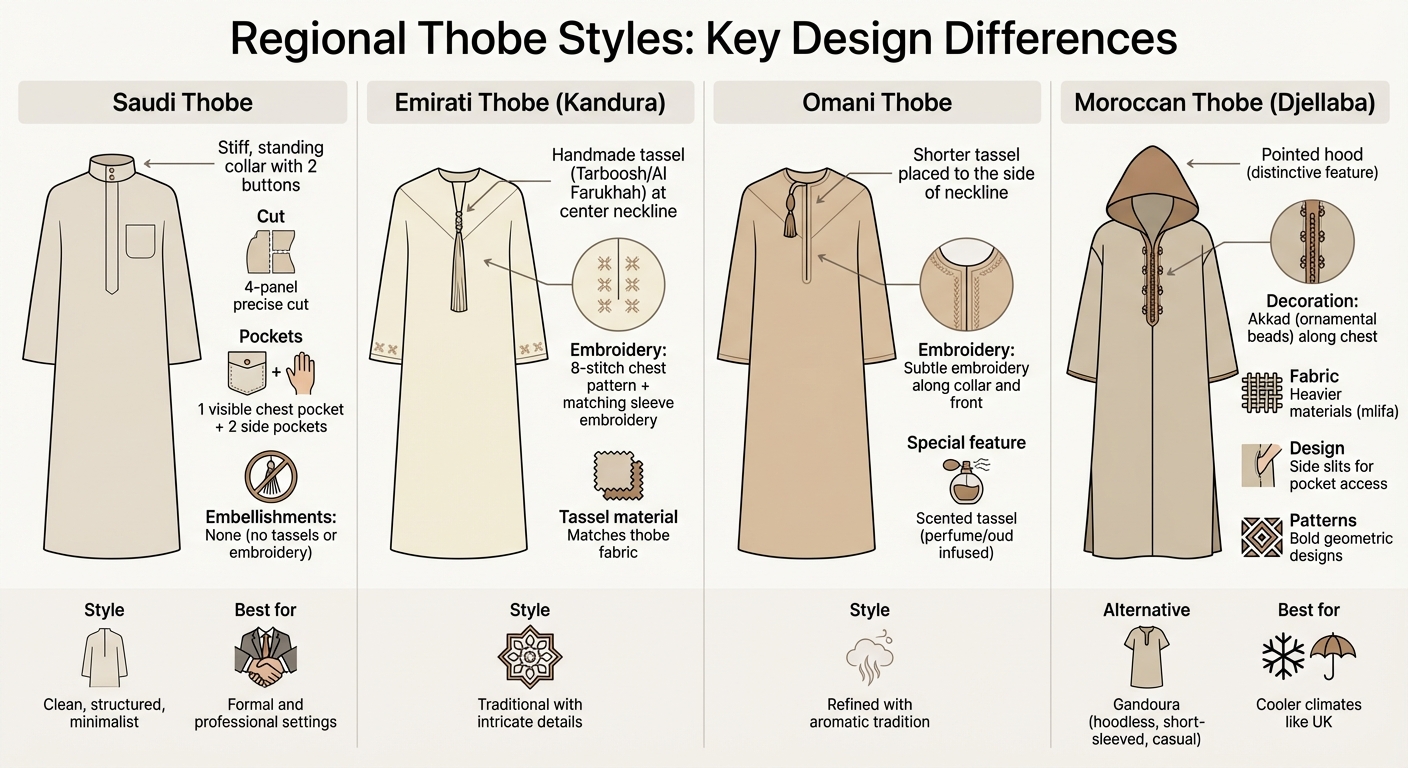
Regional Thobe Styles Comparison: Saudi, Emirati, Omani and Moroccan Designs
Thobes come in a variety of regional styles, each shaped by local traditions, climate, and craftsmanship. These variations go beyond fabric and stitching, offering unique design elements that reflect cultural identity. Choosing the right thobe can help you honour your heritage while meeting the demands of specific occasions and everyday practicality.
Saudi Thobe: Simplicity and Elegance
The Saudi thobe is known for its clean, structured design. It features a stiff, standing collar secured by two buttons, a precise 4-panel cut, and a practical layout with a visible chest pocket and two discreet side pockets. Its minimalist style avoids tassels or intricate embroidery, making it ideal for formal and professional environments. This understated design mirrors the refined and professional ethos often associated with Saudi culture.
Emirati and Omani Thobes: Tradition in the Details
Both the Emirati and Omani thobes are collarless, but their unique embellishments set them apart. The Emirati kandura includes a handmade tassel (Tarboosh or Al Farukhah) at the neckline, crafted from the same fabric as the garment. It also displays an 8-stitch chest pattern and matching embroidery on the sleeves.
The Omani thobe, on the other hand, features a shorter tassel placed to the side of the neckline and subtle embroidery along the collar and front. A unique touch is the scented tassel, often infused with perfume or oud, ensuring a lingering fragrance throughout the day. These intricate details highlight the cultural richness of the Gulf region, offering a striking contrast to the sleek Saudi style.
Moroccan Thobe: Functional and Ornamental
The Moroccan thobe, or Djellaba, is instantly recognisable by its pointed hood and decorative akkad (ornamental beads) along the chest. Designed with versatility in mind, it works particularly well in cooler climates like the UK. Made from heavier fabrics such as mlifa, the Djellaba includes practical side slits for easy access to trouser pockets. For a more casual option, the Gandoura offers a hoodless, short-sleeved design with a relaxed fit. Moroccan thobes often feature bold patterns and geometric designs, blending functionality with a distinct aesthetic that sets them apart from the Gulf styles.
These regional designs not only highlight cultural traditions but also offer practical insights into choosing a thobe that suits your lifestyle and preferences. Whether you prefer the sleek lines of the Saudi thobe, the intricate details of Emirati and Omani styles, or the versatile Moroccan Djellaba, each option tells its own story.
sbb-itb-81d10cb
How to Identify Quality Thobes at Al-Badr Clothing
Once you know what makes a thobe stand out, the next step is figuring out how to spot these qualities when shopping. Al-Badr Clothing makes this process easier by offering detailed product descriptions, customer reviews, and a range of premium fabric options. These resources work together to help you make confident choices.
Reading Product Descriptions and Material Information
A thobe’s quality often becomes clear in its product description. Look for specific fabric details rather than generic phrases. For example, terms like "100% Japanese cotton" suggest a soft, breathable fabric ideal for warm weather, while "Premium English wool" indicates excellent insulation for chilly UK winters.
Craftsmanship details are equally important. Features such as "hidden modern zips", "round collars", or "removable tassels" (Tarboosh) highlight a focus on durability and practicality. Don’t overlook the sizing information, either - Al-Badr uses clear measurements, such as 54L, which means 54 inches in length with a 48-inch chest circumference.
Using Customer Reviews
Customer feedback is a great way to get a sense of a thobe’s real-world performance. Reviews often cover practical aspects like fabric thickness, fit accuracy, and durability - whether it keeps its shape or avoids issues like loose threads over time.
Photos shared by customers add another layer of insight. These images show how the thobe looks on actual people, which helps you assess details like fabric opacity, how it drapes, and how colours appear in natural light. They also reveal whether decorative elements like embroidery or tassels hold up after regular use. Focusing on reviews for premium collections with ratings of 4.5 stars or higher can give you added confidence in your choice.
Premium Collections and Fabric Options
Al-Badr Clothing offers several standout collections to suit different needs. For colder months, the Winter Emirati collection (£36.99) features English wool, providing warmth without adding bulk. Meanwhile, the Essentials collection (£32.99) includes soft, breathable fabrics available in elegant shades such as French Beige, Desert Taupe, and Egyptian Blue.
For a touch of sophistication, the luxury silk-feel options combine traditional designs with modern features like hidden zips and breathable materials. These fabrics, often boasting thread counts of 300 or higher, significantly reduce transparency issues - by up to 50% compared to basic polyester blends. When browsing these collections, think about both your climate and the occasions you’ll wear the thobe. Heavier fabrics are perfect for formal events or cooler UK evenings, while lighter materials are ideal for daily comfort and warmer weather.
Conclusion
Selecting a top-notch thobe boils down to three key factors: fabric, craftsmanship, and design. The material forms the backbone of both comfort and durability, whether it's breathable Japanese fabric for warmer climates or insulating English wool for chillier days. Meanwhile, details like precision stitching, a perfect fit, and thoughtful touches - such as hidden zips or embroidered collars - are what truly set premium thobes apart.
Regional styles also play a significant role, each reflecting a unique sense of identity. Whether it's the clean, structured lines of a Saudi thobe, the understated elegance of a collarless Emirati kandura, or the intricate embroidery of an Omani design, understanding these distinctions helps you appreciate the artistry behind each piece.
As Almanaar aptly puts it:
"The thobe is more than just a garment - it's a cultural legacy, a fashion statement, and a symbol of timeless elegance." – Almanaar
At Al-Badr Clothing, you'll find detailed product descriptions, trusted customer reviews, and a versatile range of collections. From the £32.99 Essentials line to the £36.99 Winter Emirati collection, there's something tailored for every climate and occasion. This transparency makes it easier to choose a thobe that not only looks good but also lasts.
Armed with this insight, you can shop confidently at Al-Badr Clothing, knowing exactly what to look for in a thobe that blends style, comfort, and durability.
FAQs
How can I identify a high-quality thobe?
A well-made thobe is defined by its fabric, stitching, and finishing touches, each playing a key role in its overall quality. Start with the fabric - opt for breathable yet sturdy options like lightweight cotton-linen blends or polyester-cotton mixes (ideally with an 80% polyester and 20% cotton ratio). The material should feel smooth to the touch, drape effortlessly, and offer comfort in warm weather without appearing too sheer.
Pay close attention to the stitching and seams. High-quality thobes are crafted with tight, even stitching and reinforced areas at stress points such as cuffs, collars, and side seams. Double stitching adds durability, while clean, hidden plackets and the absence of loose threads signal expert tailoring.
Lastly, consider the finishing details. Look for a crisp, well-structured collar, sturdy buttons or snaps, and precise embroidery or decorative stitching. These thoughtful elements, paired with excellent craftsmanship, ensure the thobe maintains its shape and elegance over time, making it both a practical and stylish wardrobe staple.
How can I make sure my thobe fits perfectly?
To get the perfect fit for your thobe, you'll need to take a few key measurements in centimetres. Start by measuring your height from the top of your shoulder (close to the collarbone) down to just above your ankle, as this is where the thobe should end. Next, measure the fullest part of your chest (just under the arms), the width across your shoulders, and the length of your arm from the shoulder to the wrist. For added precision, especially if you prefer a tailored cuff, measure around your wrist and the widest part of your biceps. Using a flexible tape measure and having someone assist you will help ensure accuracy.
When choosing your size, make sure the shoulder seams sit correctly at your natural shoulder points, and the chest measurement allows for a relaxed drape without feeling tight. A properly fitted thobe should have sleeves that comfortably reach your wrists and a length that stops just above the ankle. Once your thobe arrives, try it on to check how it feels when sitting, walking, and moving your arms. If you find it needs adjustments, Al-Badr Clothing makes the process easy with their straightforward exchange policy for UK customers, so you can get the perfect fit hassle-free.
What are the best fabrics for thobes in different climates and occasions?
Choosing the right fabric for your thobe is key to staying comfortable and looking your best, no matter the weather or occasion. For those hot summer days, lightweight and breathable materials like cotton or linen are your go-to options. Long-staple Egyptian cotton, especially when treated with a Toyobo finish, is soft, airy, and does an excellent job of keeping you cool, even when the temperature climbs above 30°C. Linen is another great choice, thanks to its natural breathability. If you're after something light and travel-friendly, cotton-polyester blends are a practical option. However, keep in mind they might not be as breathable as pure cotton or linen.
When the weather turns cooler, denser fabrics or warmer fibres are the way to go. Egyptian cotton offers just enough insulation for those crisp mornings, while wool or wool-blend thobes provide the warmth you need on colder days. They also have a refined appearance, making them ideal for formal events like Eid celebrations or weddings. For everyday wear or travel, crease-resistant fabrics, such as Toyobo-treated cotton or polyester-rich blends, are a smart choice. These materials help your thobe maintain a polished look with minimal upkeep.
By selecting breathable fabrics for summer, warmer options for winter, and easy-care materials for travel, you can ensure your thobe is perfectly suited to the season and occasion.